
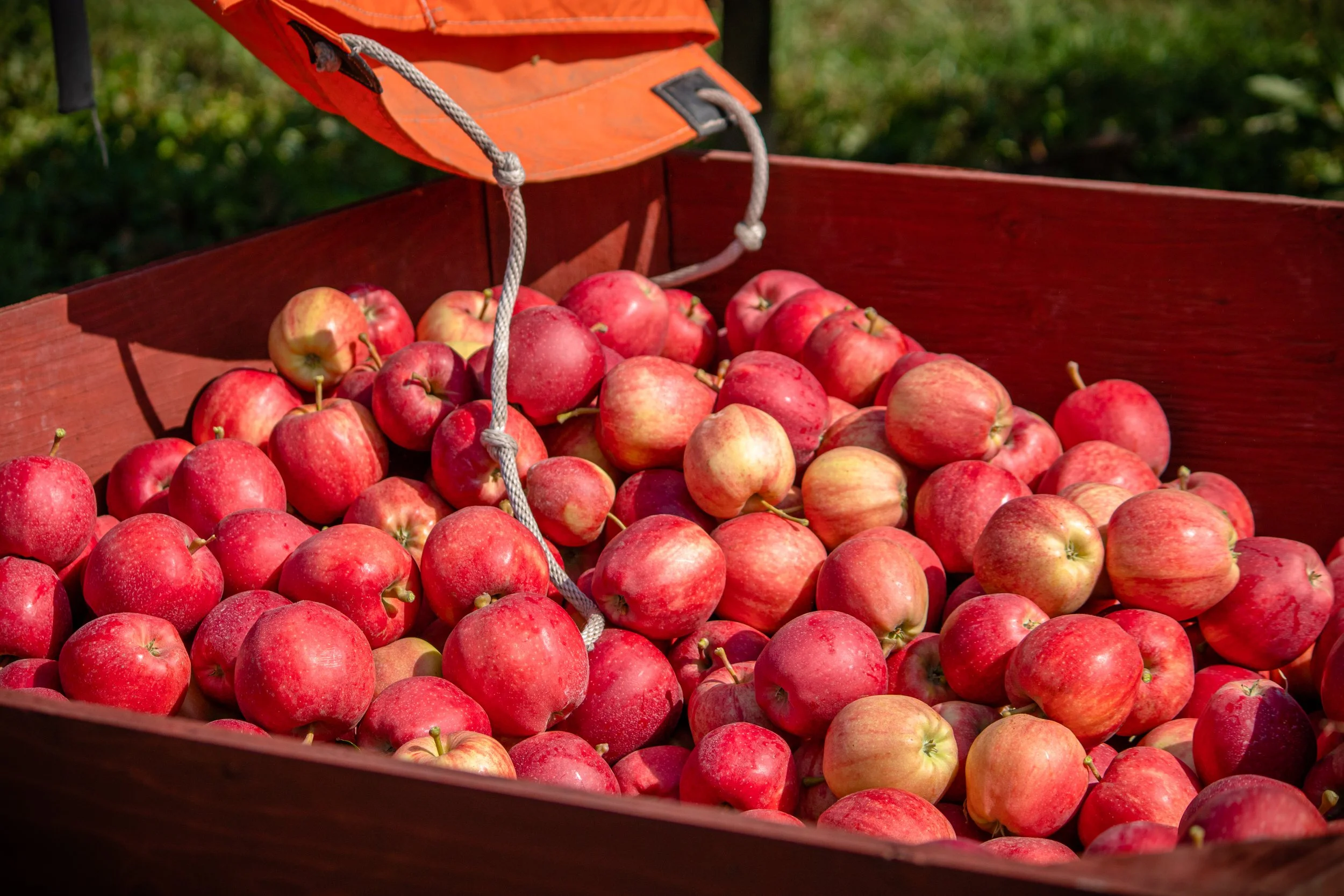
Our Apple Varieties
The Davison Family has been growing high quality apples in Vernon, BC since 1933. Hand-picked at peak ripeness, here you will find your favourites and discover something new. Varieties include Honeycrisp, Ambrosia, McIntosh, and Royal Gala, delivering the true taste of the Okanagan Valley from our family farm to your table.
Transparent
History
This heritage variety has been around for a long time. It was discovered in Eastern Europe in approximately 1850, and has been in North America since about 1870. It has also been called the yellow transparent, white transparent, or glass apple.
Description
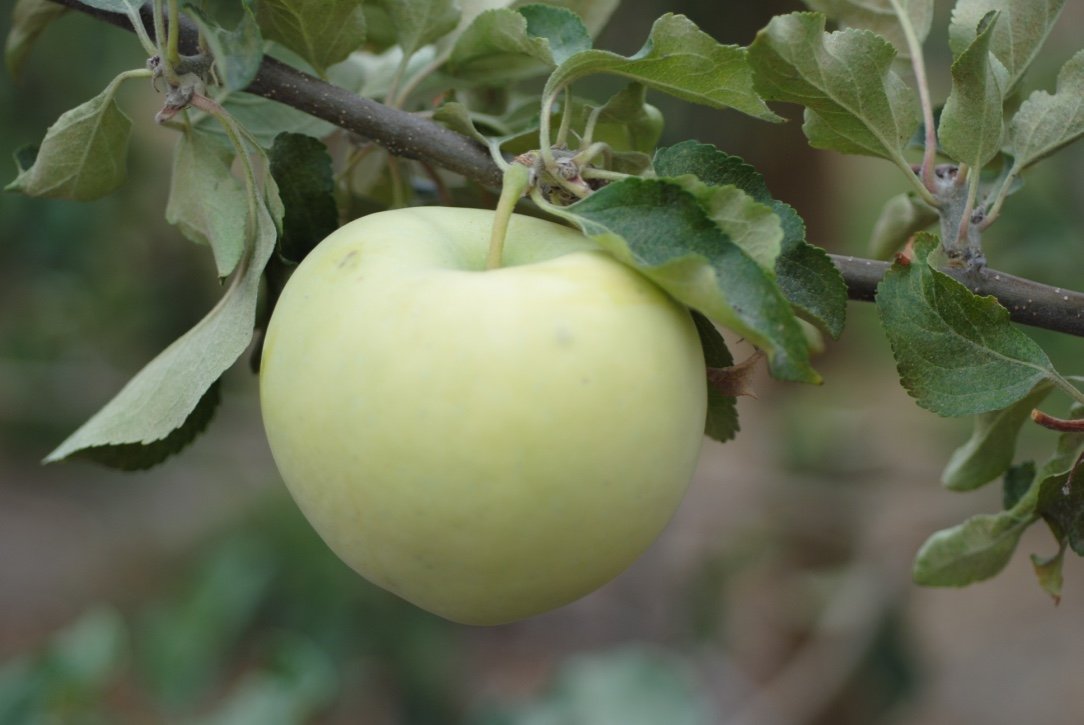
The Transparent is a medium sized apple with pale green skin and white flesh. It is an extremely tart variety, the most tart apple we grow. It is not recommended for fresh eating, unless you have a desire to pucker up! It has a high level of acidity.
This apple is difficult to find. It is unlikely to be carried by grocery stores because of its very short life span after picking.
Harvest Availability
This apple is our very first variety of the season, typically available in early July.
Best uses
Pie, pie and more pie! Transparents are our top choice for our own apple pies in our bakery. They are also fantastic for applesauce because of their unbeatable flavour. This apple does not keep well. It needs to be kept cool and will only stay fresh for about a week to ten days.
Sunrise
History
Developed at the Summerland (BC) Research and Development Centre, Sunrise is a product of crossing the traditional McIntosh and the flavourful Golden Delicious. After being introduced in the early 1990's, the Sunrise apple has grown in popularity, and is our first eating apple of the season.
Description
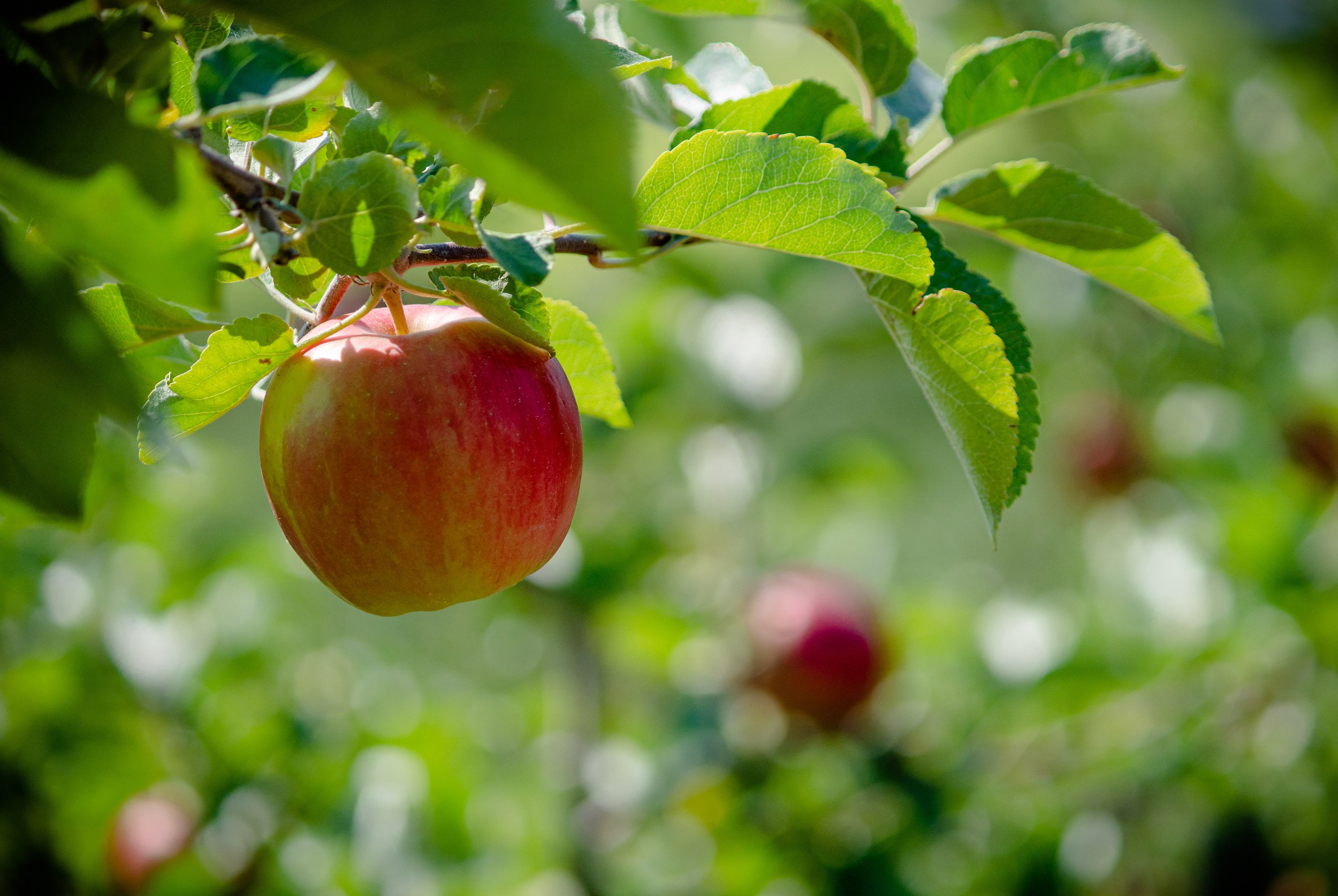
Sunrise is medium to large in size, and has a pale yellow background with pink to bright red cheeks that covers over half of the apple. Biting into this crisp and juicy apple exposes the cream coloured flesh, and offers a refreshing summer flavour. Early apple varieties can have difficulty producing flavour, but Sunrise has a pleasant balance of sweet and sharp, and for such an early apple, is incredibly juicy.
Harvest Availability
Sunrise is ready to be picked in early August, and is the first summer eating apple we harvest. It is considered a multiple pick cultivar, meaning we go through the rows to harvest at least 3 times to ensure maximum flavour of the apples.
Best uses
Sunrise can keep for about 2 weeks in the fridge (which is better than most early varieties). Sunrise can be used in baking, applesauce and for dehydrating, but we enjoy simply eating it fresh!
Akane
History
The Akane apple is of Japanese origin, and offers a pleasant and tasty option for an early season apple. Akane was developed during World War 2, but only introduced worldwide in 1970. It represents an unusual blend in varieties of the classic English Worcester Pearmain and the American heritage variety, Jonathan.
Description
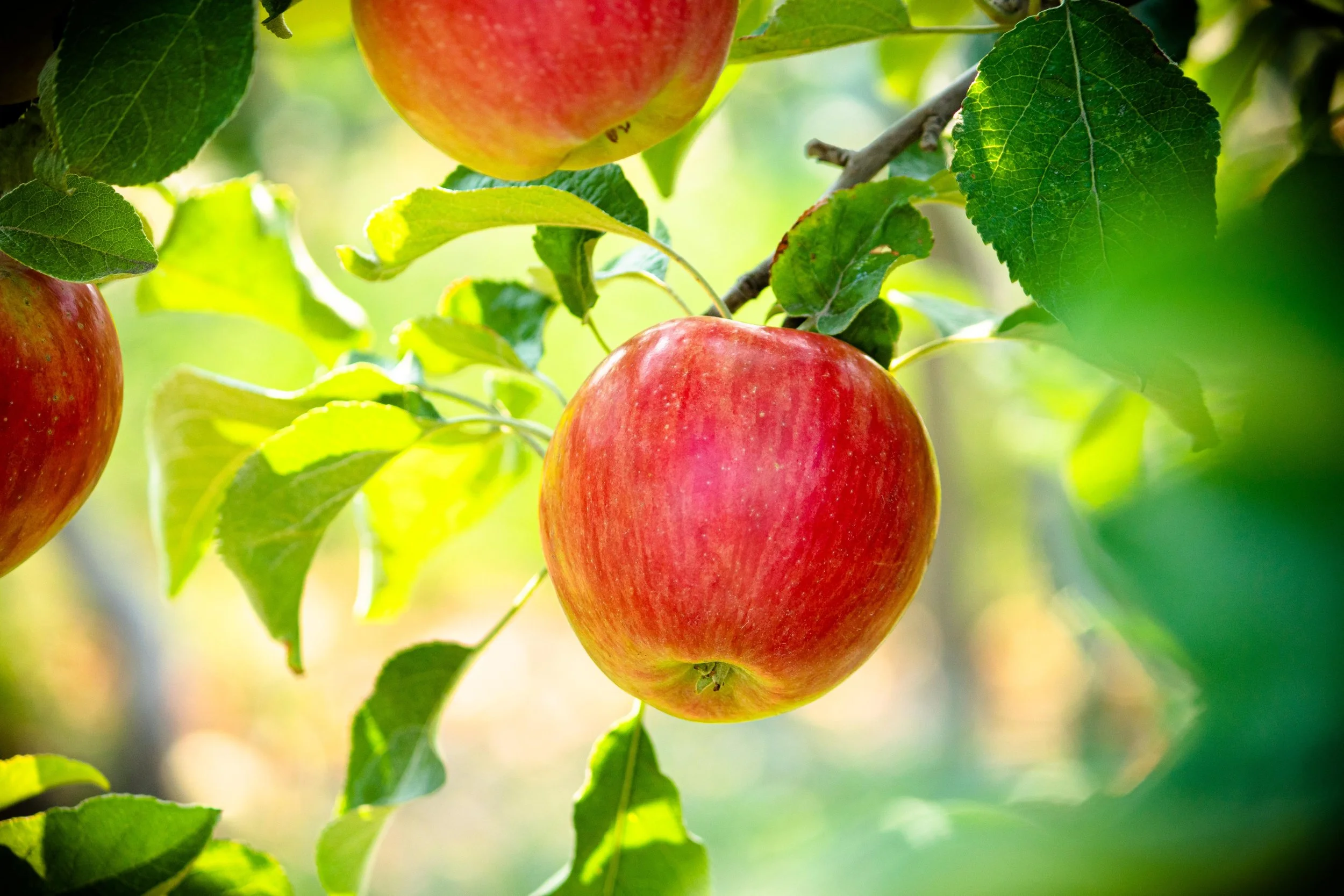
Akane are bright red and quite firm, with a smooth clean skin. While the size of Akane may vary, it is typically a medium apple with a pale white flesh.
It is considered to be one of the best early season apples with an unusually good balance of sweet and sharp flavours. The flesh is firm, rather than crisp and juicy, and boasts a very 'English' flavour.
Harvest Availability
An early season apple, typically harvested in mid-August.
Best uses
While Akane is not a long keeper, it is a delicious apple for eating fresh. Akane can also be used for baking or in desserts because of its slightly tart flavour and texture, which holds up very well when baked. This is a multi-purpose apple and can even be great for juicing.
Silken
History
Silken was first introduced in 1999 from the Summerland Research and Development Center, just south of us in the Okanagan Valley. Silken is an amazing eating apple, developed from a cross between two delicious apple varieties: Honeygold and Sunrise.
Description
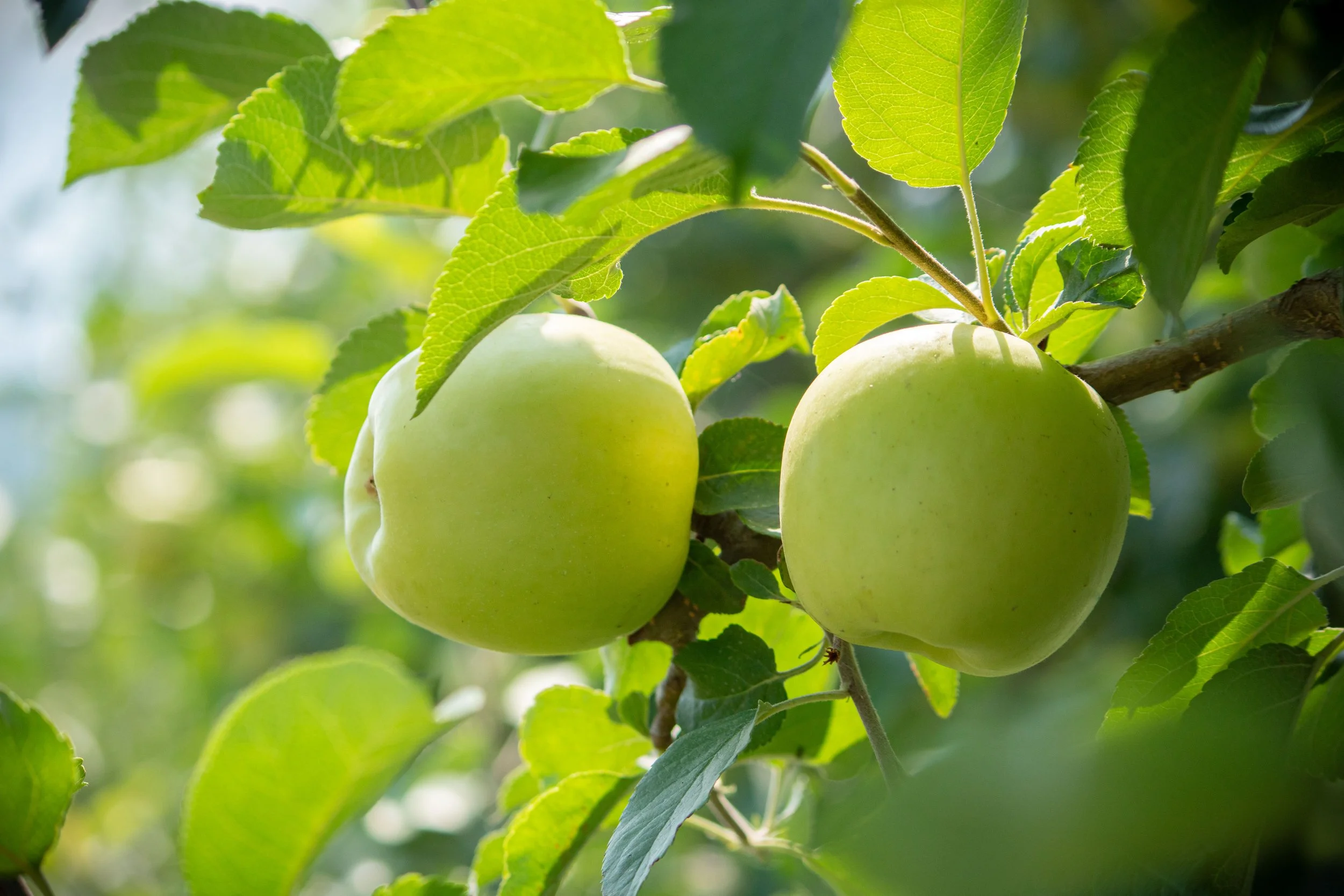
Silken is one of Farmer Tom's favourite apples, and is well known for its outstanding texture and flavour. The white flesh is firm, crisp, juicy and sweet, with moderate acidity. Boasting a slight honey taste, amazing texture, and early harvest, Silken is a favourite apple for many people.
Although Silken only has a short harvesting season, it grows to a medium size, and can be identified by its cream colour and thin, almost translucent, skin.
Harvest Availability
Silken is an early to mid season apple, ready for harvest in late August to early September.
Best uses
Because of its amazing honey taste the Silken is a fantastic fresh eating apple! After harvest, it can keep for approximately 4 weeks if refrigerated.
McIntosh
History
The McIntosh apple has been enjoyed since 1811, when John McIntosh discovered the first seedling in Dundela, Ontario. John cleared land on his farm near the USA border and transplanted the seedling. It didn’t take long for the apple variety to become locally famous.
Description
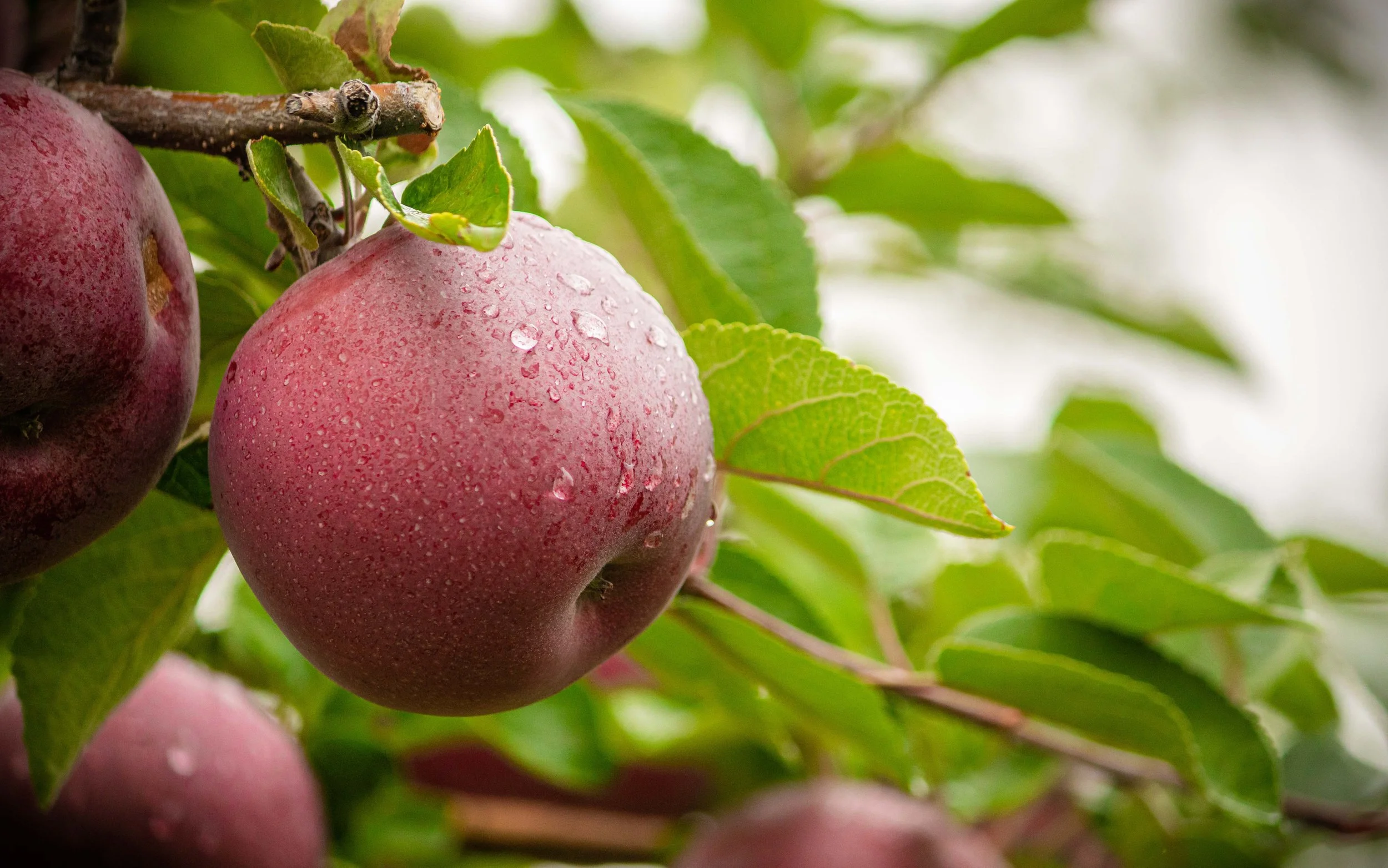
The classic Mac has a shiny swirl of green and cherry red, very charming looking in a basket of apples. Most of the newer strains of Macs are almost completely deep red. They all have a thick, hearty skin and white flesh. Macs are considered a medium sized apple, but tend to grow to an amazing size on our sunny slopes.
While eating a Mac, you'll experience a cider like, almost fermented, flavour. They are a rather savoury apple, with the slightest hint of curry that lingers on your lips. Its tender, white flesh has a sweet and tart tang, with juice that will satisfy the taste buds of all ages.
Harvest Availability
McIntosh are typically harvested at the beginning of September, with availability running until Thanksgiving weekend.
Best uses
McIntosh are superb for making fresh juice and excellent for eating fresh. They break down quickly when cooked, making them a good choice for applesauce or baking with in muffins and loaves. They also dehydrate nicely.
Ginger Gold
History
First introduced in the 1960's from the United States, Ginger Gold was a discovered as a chance seedling that grew from its parent apple, Golden Delicious.
Description
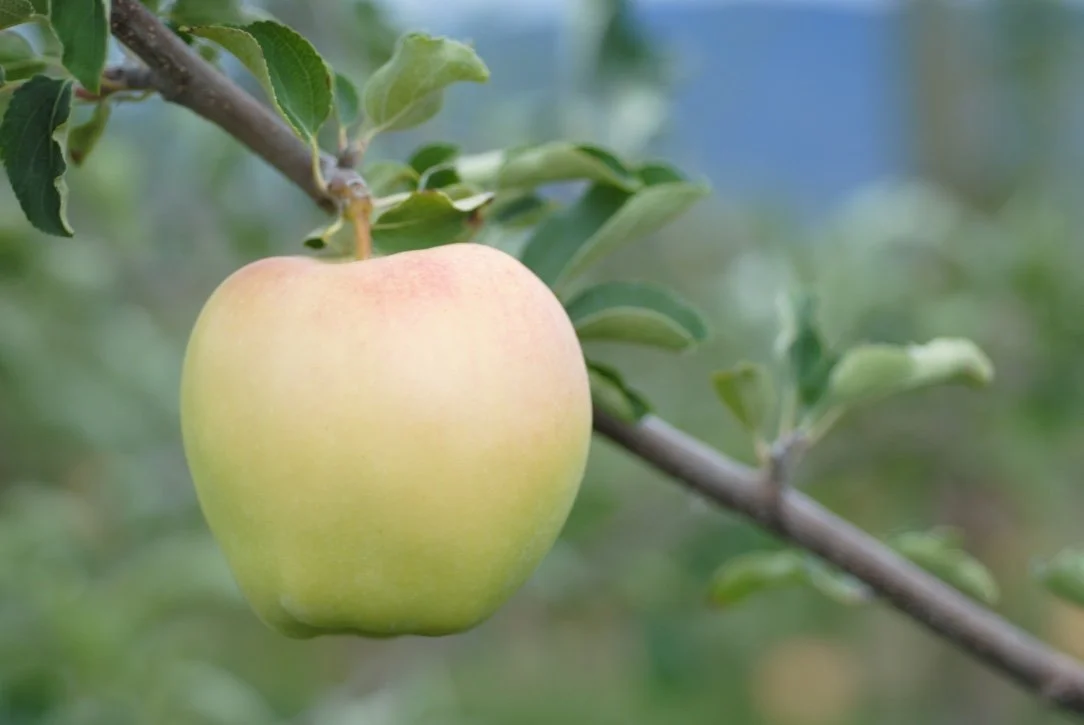
Ginger Gold is an early season variety with a pale, smooth, and consistent yellow skin characterized by greenish brown spots on its surface. Its crisp, cream coloured flesh has a fine texture, and does not oxidize right away when cut. This firm, juicy apple has a very mild, sweet-tart flavour.
Harvest Availability
Ginger Gold is typically available in late August through until mid September.
Best uses
Ginger Gold is generally considered one of the best early season eating apples. It is a good keeper, and can last several weeks in the fridge. Because its flesh is slow to oxidize, Ginger Gold is a great apple for salads, apple slices, and even for using in pies and crisps.
Royal Gala
History
Royal Gala originated in New Zealand in the 1920's as a cross between Kidd's Orange Red and Golden Delicious. Royal Gala is now one of the most widely grown apple varieties in the world, and is available year round from production in both hemispheres.
Description
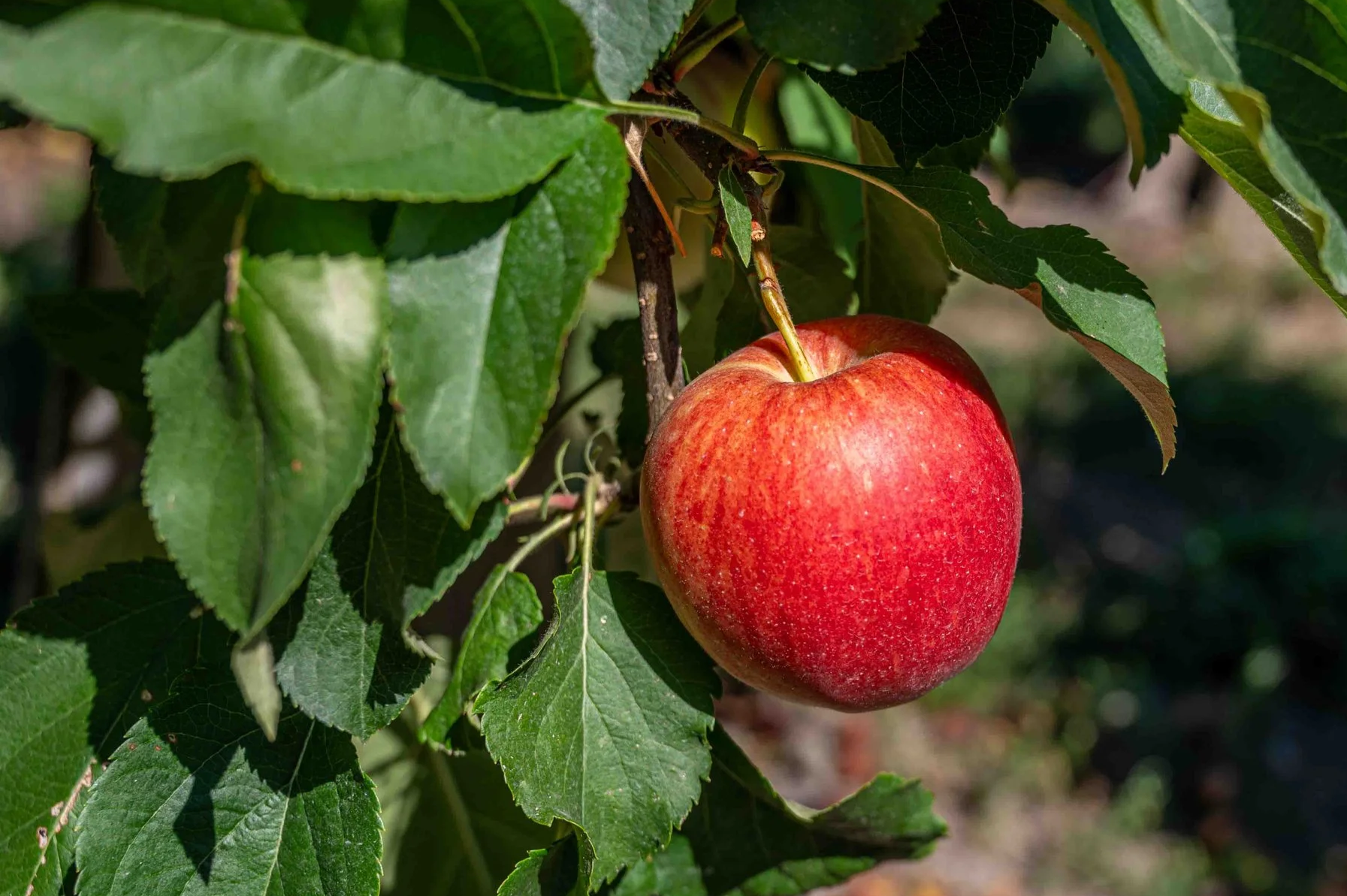
This bicolored modern apple is red-yellow in colour, with a continuum of pinkish orange stripes. It is medium in size with a waxy thin skin, golden flesh, and firm consistency.
A fresh Gala has a gloriously mild sweet flavour. Its juicy, mellow taste and thin skin make it a great choice for lunches and kids snacks. Royal Gala is both crisp and tender; no wonder it has been a customer favourite for years!
Harvest Availability
Royal Gala is well known for its juice spraying abilities and crunch. In the Okanagan, Royal Gala is harvested in mid-September, and is available into October.
Best uses
Royal Gala is considered to be an excellent apple to eat fresh off the tree or in a refreshing salad. It also holds its shape well in pies and tarts.
Davison Honeycrisp
History
Honeycrisp was developed in the apple-breeding program at the University of Minnesota. Nearly discarded, someone finally recognized its unique flavour and texture. It has now taken the apple world by storm!
Description
“When you bite into a Honeycrisp, one perfect, bite size chunk cleaves effortlessly into your mouth with a snap. Sweet juice sprays across your taste buds—an effect of the exceptionally large and turgid cells which pop like caviar.” – Rowan Jacobsen
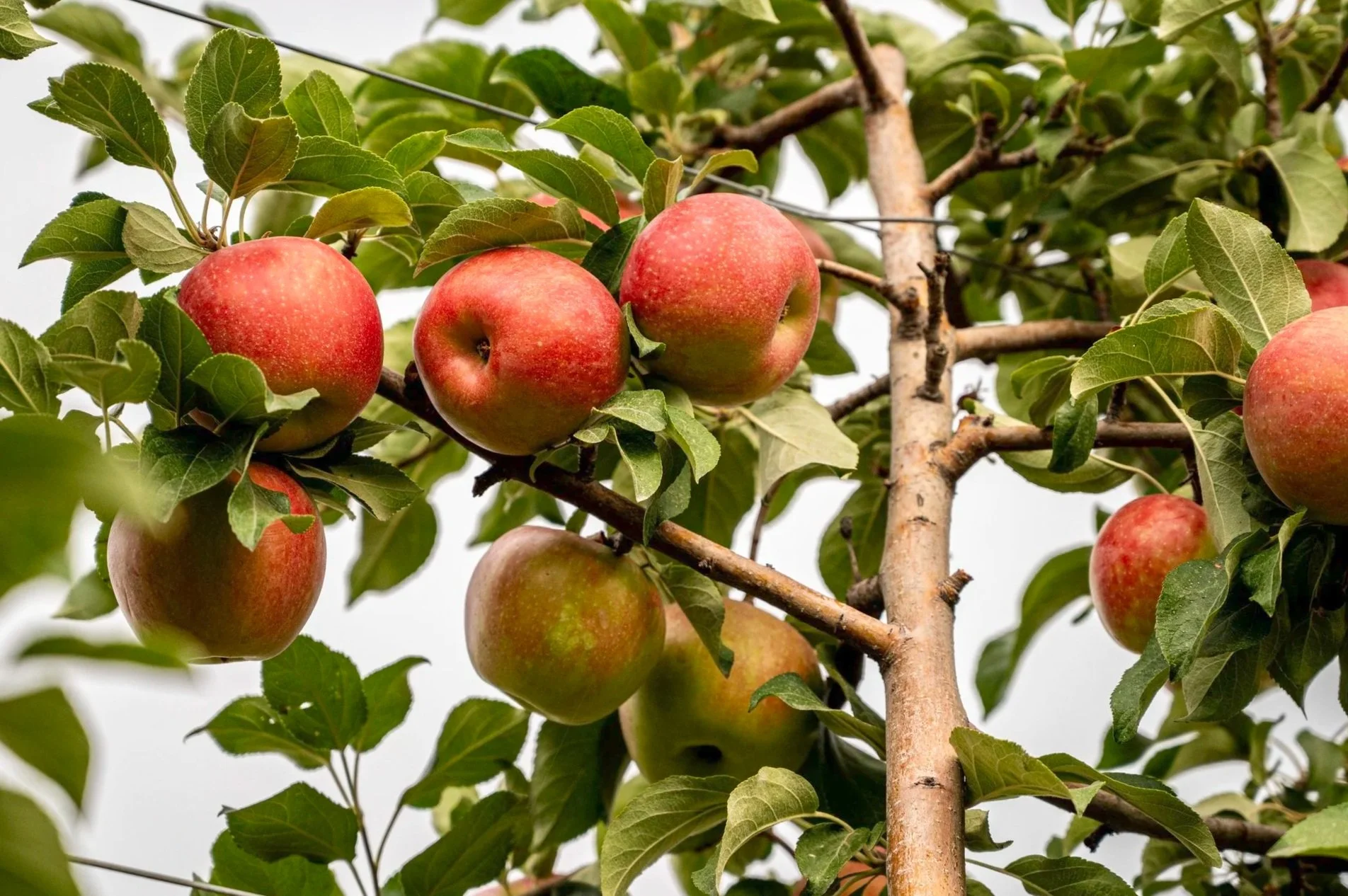
Davison Honeycrisp are known for their large to jumbo size and incredible flavour. They have a light green or yellow background, and an overcoat that is brick-red with a hint of pink. The skin sometimes has white, star-like speckles on it. The flesh is white with a pleasant density and crispness.
The flavour and eating experience of Honeycrisp is what makes it one of our most popular varieties. It is sweet and impossibly juicy, exploding in your mouth when you bite into it because of it’s uniquely large cell structure.
Harvest Availability
Honeycrisp are ready for harvest in late August and are usually available until the end of October. They keep very well in cold storage and retain their crispness.
Best uses
An all-around superstar! Our Honeycrisp are famous for devouring out of hand. The flavour holds great in dehydrated apples. They also make incredible applesauce and pies.
Arlet
History
Arlet is a modern, Golden Delicious style, apple developed in Switzerland in 1989. It is a cross between the varieties Golden Delicious and Ida Red.
Description
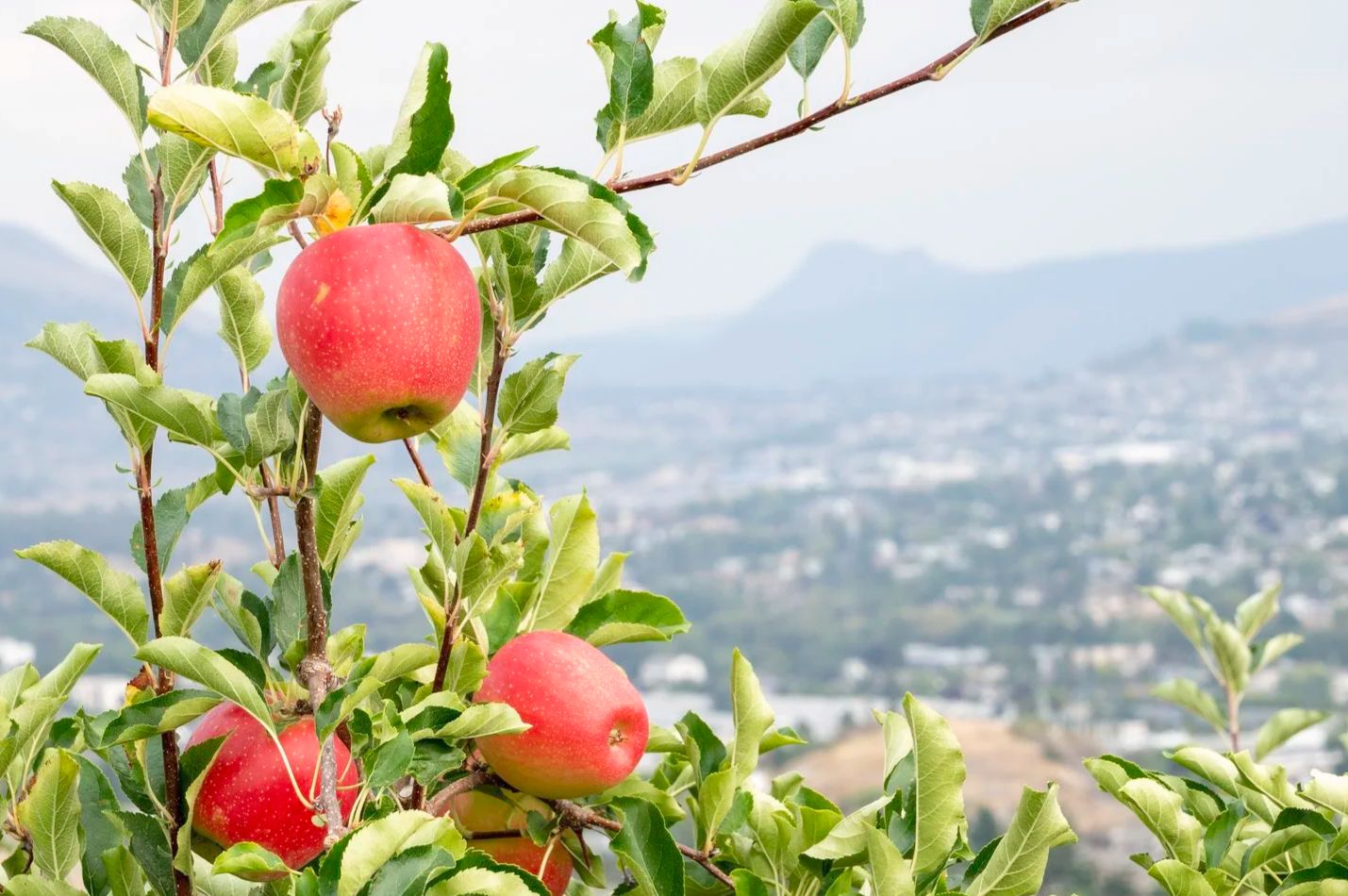
Arlet is a sweet, mid-season dessert apple with a pleasant, balanced flavour, good snap and a juicy finish. Medium to large in size, Arlet is an attractive oval-shaped apple with a deep stem well, bright red cheeks and white speckles.
Harvest Availability
Arlet ripens in early September and keeps very well, not surprising since both Golden Delicious and Ida Red are long keepers.
Best uses
Arlet is great for fresh eating, baking, juicing and is also a good keeper. Store your box of Arlet in a cool place and it will last for 3 months, or more!
Aurora
History
The name of the Aurora Golden Gala was chosen in a nationwide internet-based 'Name the Apple Contest' put on by Agriculture and Agri-Food Canada. Aurora was developed in the Okanagan Valley, and is a cross between Golden Delicious and Royal Gala.
Description
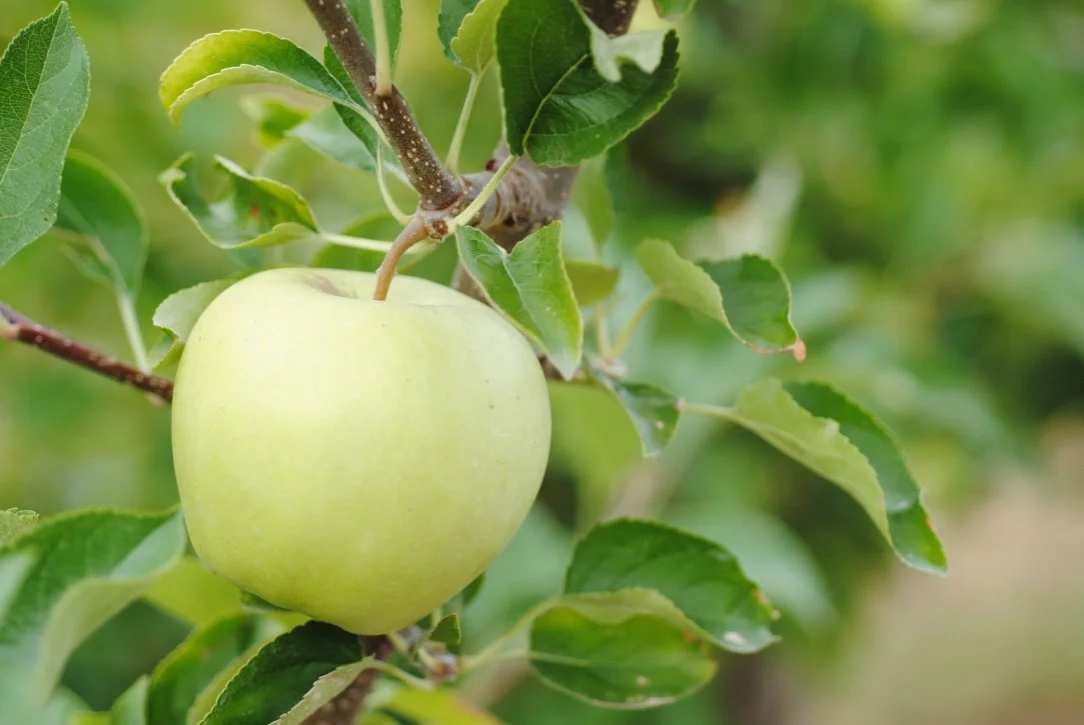
Auroras are small to medium in size with a creamy, yellow coloured skin. Because we are in the North Okanagan, the cooler fall nights sometimes produce an attractive pink blush over the outside of the apple.
The flesh is very crisp, juicy and cream to pale yellow in colour. It is sweet, mild, and tastes absolutely fresh in flavour with light honey and tropical notes.
Aurora is Grandpa Bob's favourite apple!
Harvest Availability
Aurora is picked in mid-September, and is typically available until mid to late October.
Best uses
Aurora is known as a dessert apple, meaning that its flavour is best enjoyed fresh. You can eat it on its own, use it in salads, or make some apple nachos!
The thin skin of Aurora bruises easily and the cut flesh browns quickly, so use a bit of extra TLC when handling these amazing apples. Keep them cool and you will find they are an excellent storage apple.
Ambrosia
History
Ambrosia was born from a chance seedling in the Similkameen Valley of BC. The seedling appeared among a row of Jonagold apples, and developed into a healthy tree. In the early 1990's, this tree bore its first fruit. In Greek mythology, 'Ambrosia' means 'food of the gods'. Ambrosia are now grown all over the world and are available in stores worldwide.
Description
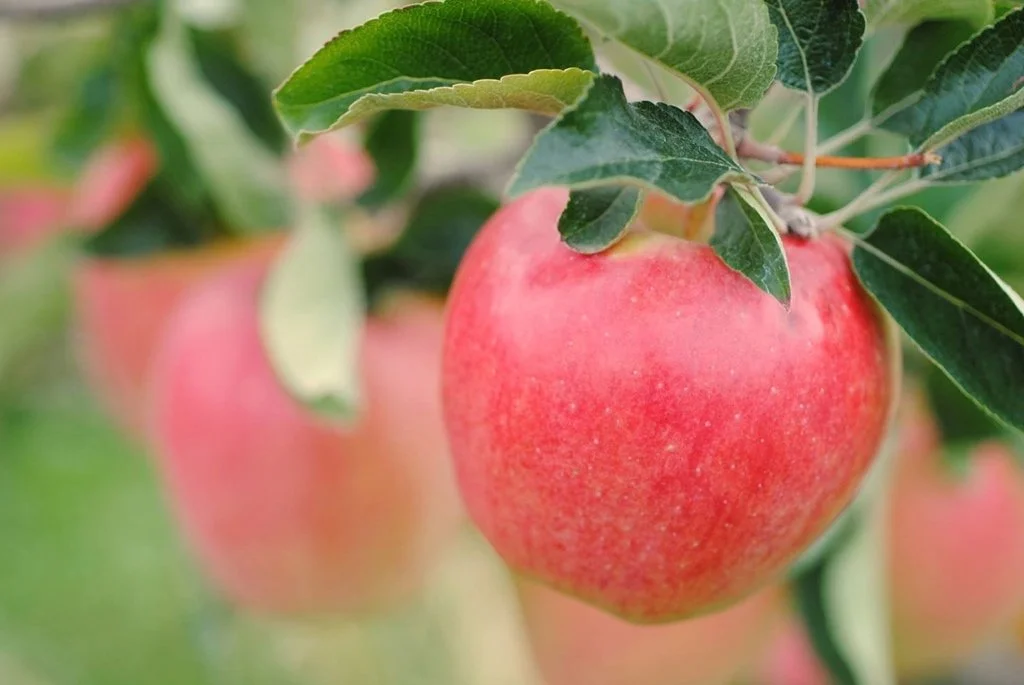
Ambrosia is a delight for the senses. Oval in shape with a deep pink blush over a yellow backdrop, this beautiful apple has a pleasant, sweet flavour and crisp yet tender texture. Ambrosia is great for those who prefer sweet over tart.
Ambrosia has a low acidity, making it easy for kids and the elderly to digest. This medium sized apple can be identified by the five prominent knobs at its base.
Harvest Availability
Ambrosia is considered a mid-season apple, ripening for harvest in early September. They require cool nights and warm sunny days to develop their glowing appearance and incredible taste, making the Okanagan the perfect place to grow this variety.
Best uses
Ambrosia is a spectacular fresh eating apple and keeps well if you store them in the crisper of your refrigerator to help the apples maintain their flavour and texture. This apple does not oxidize (turn brown) quickly, which makes it a great ingredient for salads or slicing.
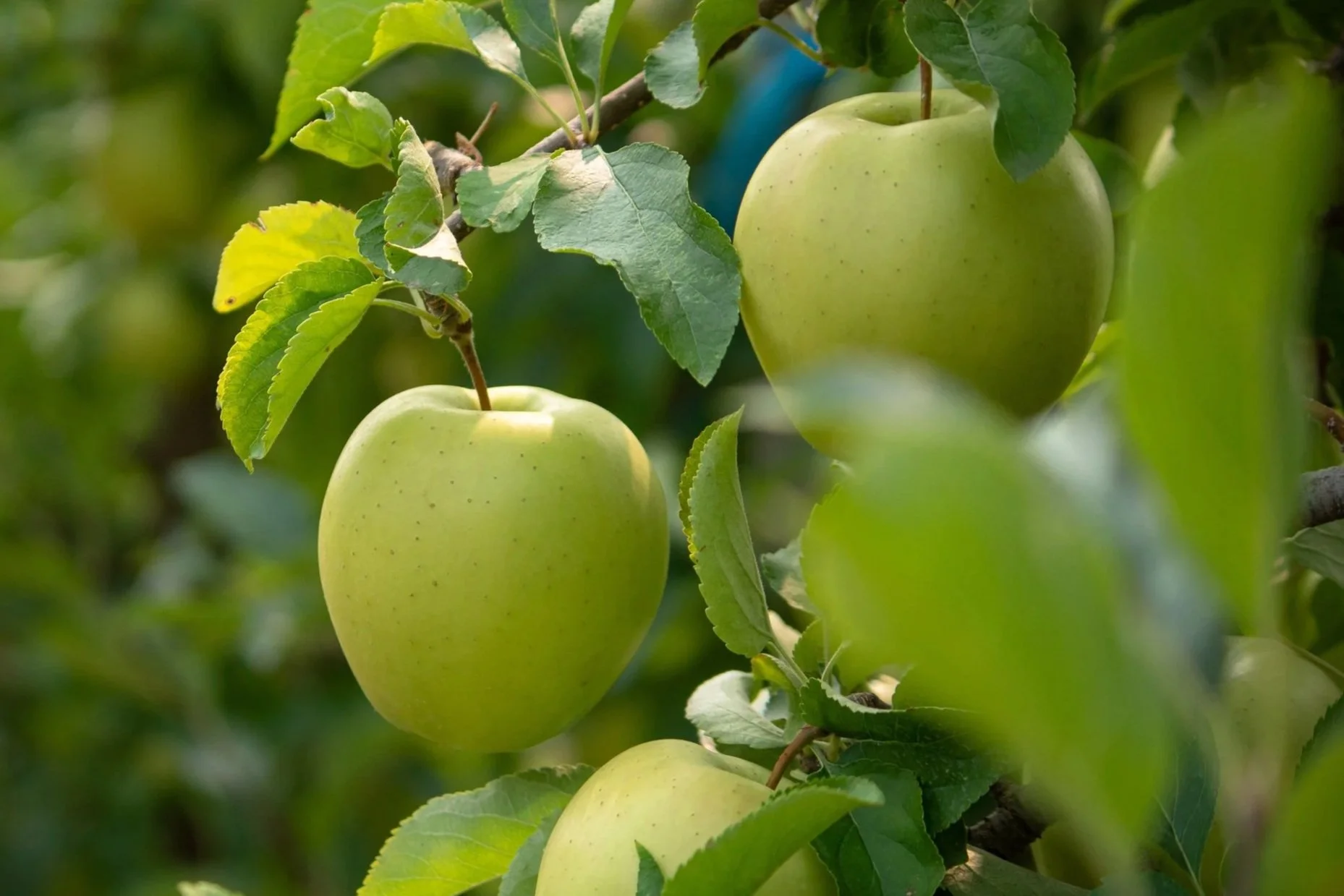
Golden Delicious
History
The Golden Delicious apple was discovered around 1900 on the Mullins family farm in West Virginia. In 1916, it was introduced commercially as a companion to the Red Delicious (although the two varieties are not related at all). The parents of Golden Delicious are unclear, but it is thought that it could be a relative of the Grimes Golden.
Description
Golden Delicious is large and slightly oblong, with a cheerful yellow skin dotted with light brown freckles. If you find it in the grocery store, the apple may appear more of a green colour, meaning it was picked too early to improve its shelf life. If cool nights come before the harvest, Golden Delicious can even have a slight pink blush.
The flavour of a Golden Delicious is not exactly complex, but it is certainly pleasant. “Sugar and spice and everything nice” really sums it up.
Harvest Availability
Golden Delicious is planted in all major apple growing areas of the world. In the North Okanagan, we receive a heavy crop in mid September, lasting about a month.
Best uses
Golden Delicious are wonderful fresh, and also have the necessary stability to be used in apple baking. For pies, you’ll want to add some lemon juice to up the acidity. Most notably, it is the apple of choice for baby food because its low acidity makes it easier to digest.
Golden Delicious is a Davison family favourite for making applesauce and apple juice!
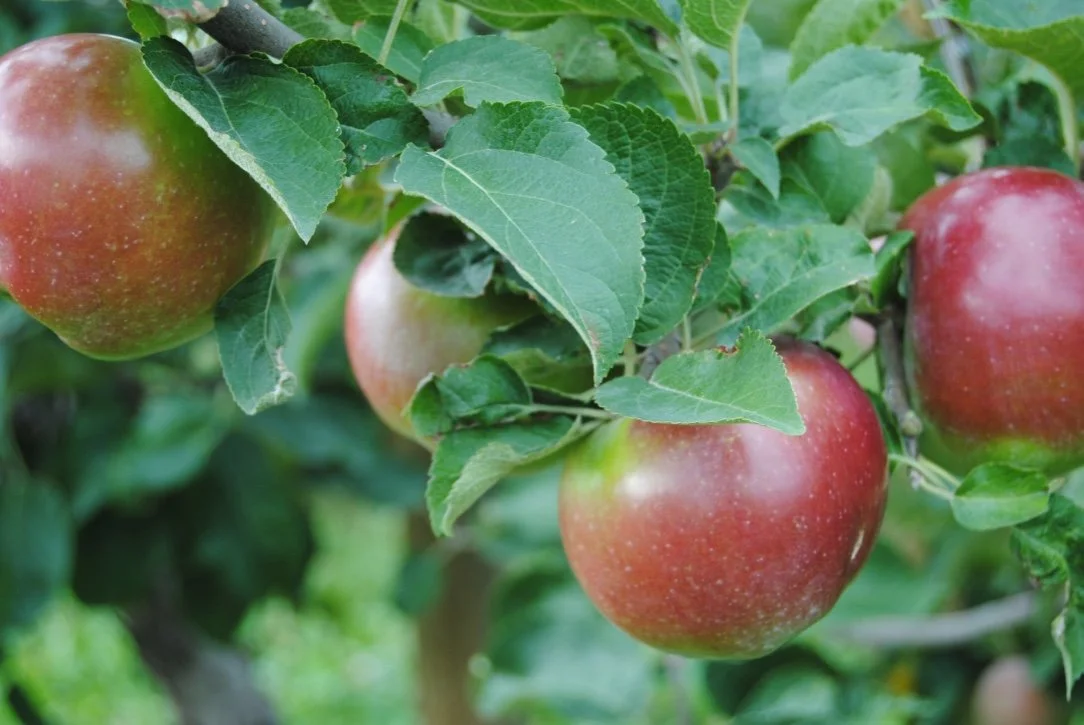
Spartan
History
Spartan was developed in 1936 at the Pacific Agri-Food Research Center in Summerland, BC. McIntosh is one of its parents. Spartan is known for its ability to grow well in more northern climates, making it a popular garden apple in the UK.
Description
Medium in size, Spartans vary from bright red to a deep purple-red overtop grass-green, depending on the weather and the length of time it ripens on the tree. Its crisp white flesh is aromatic and exceptionally juicy, with a balanced sweet, succulent and tart flavour.
Harvest Availability
Spartans are harvested in late September, and are good keepers if kept refrigerated.
Best uses
Spartans are an excellent cooking apple. Their firm flesh holds its shape, and maintains its sweet flavour when baked into pies and crisps. In addition to baking, Spartans are also a great apple for juicing and eating fresh!
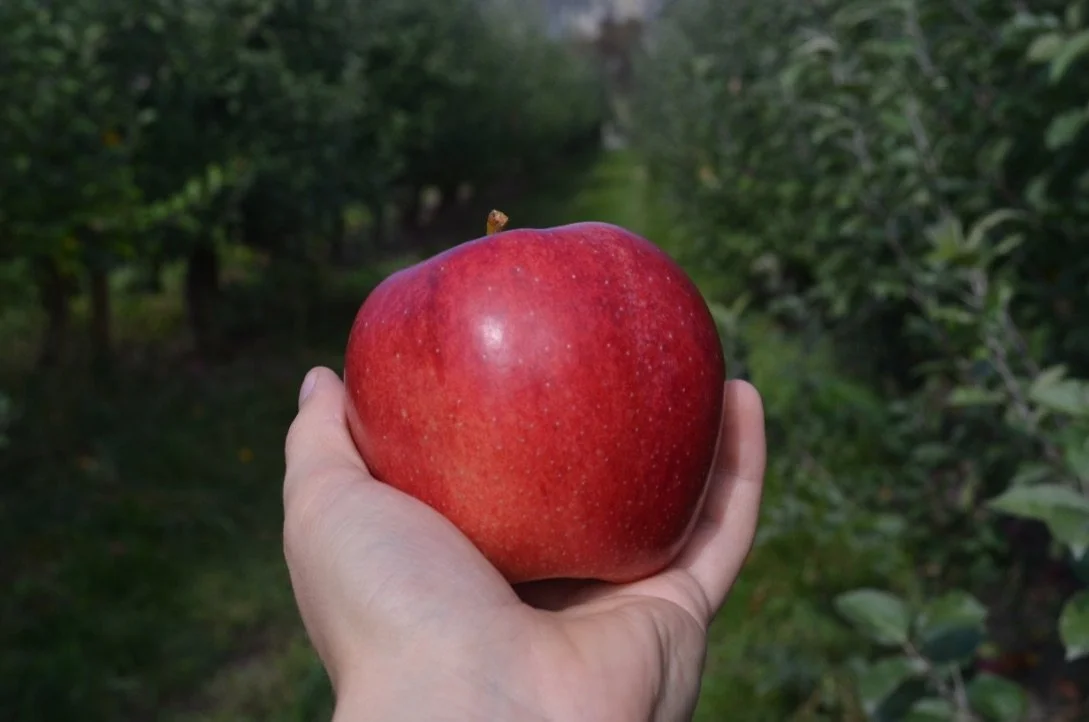
Jonagold
History
Considered as one of the best achievement of modern apple breeding, the Jonagold was bred at Cornell University, and takes the traits of both parent varieties, Golden Delicious and Jonathan.
Description
Jonagold is a big, round, red apple with yellow freckles showing through. The deep-red vertical striping and star-like dots make it visually stunning.
Strong in flavour with both sweet and sour juices competing for your attention, its aromatic honey flavouring from the Golden Delicious perfectly compliments the tart flavour of the Jonathan. Jonagold is crisp and juicy when first picked, and slowly tenderizes over several weeks.
Harvest Availability
Jonagolds are not the best keepers, but are fresh and delicious in late September and early October.
Best uses
Jonagold is considered one of the best baking apples because it stays quite firm. It tastes great out-of-hand, but where Jonagold really shines is when it’s dehydrated! Truly, they make the most flavourful dried apples - tart and sweet with a hint of ginger.
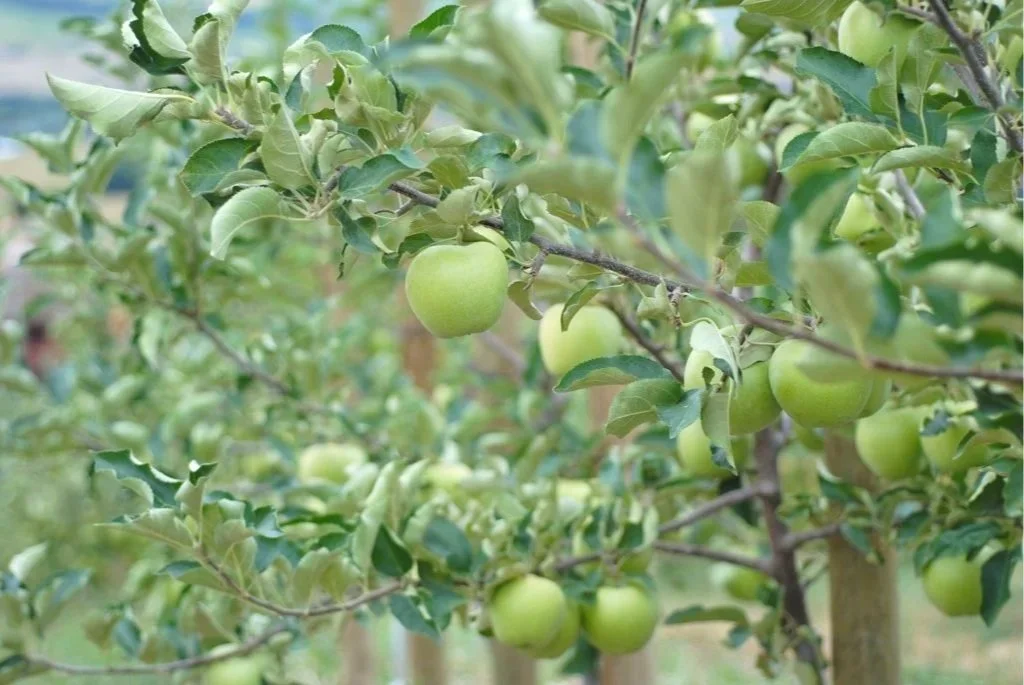
Mutsu
History
Known in the USA as Crispin, Mutsu is a cross between Golden Delicious and Indo. It is a popular dessert apple in Japan, where it was first developed in the 1930’s, and is referred to as the 'million dollar apple'.
Description
Like the Incredible Hulk, Mutsu is massive and green; quite intimidating until you get to know it. Hiding beneath its behemoth exterior, you will find an apple so sweet and juicy you may believe you’re eating a watermelon! The flesh has a nice snap to it, and once broken it releases a waterfall of clear juices running down your chin. All told, eating a Mutsu is a true experience.
Harvest Availability
Mutsu has a rather short season and is available in October. It’s flavour is best about a week after it is picked.
Best uses
Mutsu is famously good fresh and equally excellent for baking. It can be hollowed out and stuffed, battered and fried, dehydrated, or slow cooked into a sauce. Tom Davison considers Mutsu to be the best apple for applesauce.
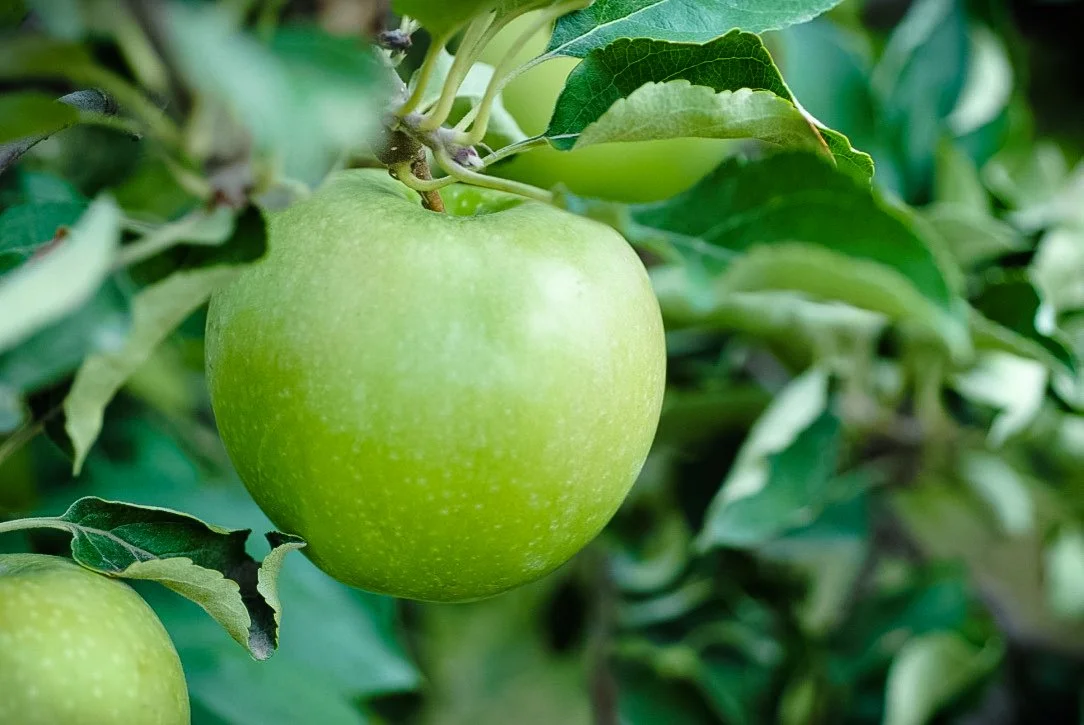
Granny Smith
History
A product of Australia, the Granny Smith is believed to be a relative of a French Crab Apple. In Australia, it was popularized as a cooking apple before it was exported as an eating apple, and is now recognized as one of the world top choices for pies.
Description
Granny Smith apples are large, glossy, and uniformly green with soft, off white speckles. They are very firm with a thick skin, but can be surprisingly juicy. Their flesh is greenish-white and crisp with a tart, acidic flavour.
Harvest Availability
Granny Smith are a late fall apple for us in the North Okanagan, and are picked in mid-October. They keep exceptionally well throughout the winter months.
Best uses
With a little help from cinnamon and nutmeg, Granny Smith will give you a legendary pie every time! Because of its high acidity and ability to hold its shape, it is best used for pie making and other baked goods.
The tart flavour can even make a great addition to soups, smoothies, and applesauce.
