
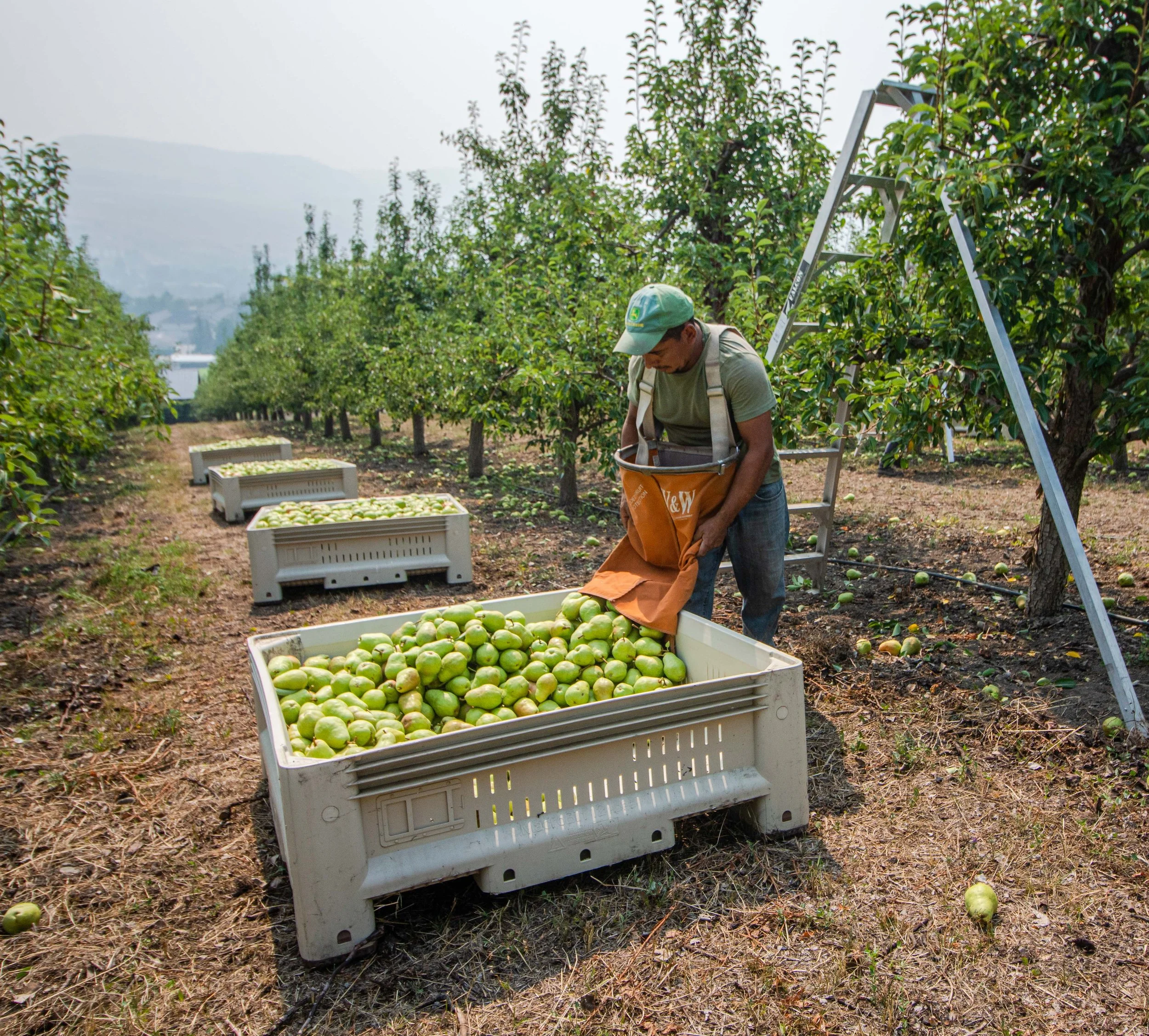
Our Pear Varieties and Other Fruits
Discover fresh pears, prune plums, cantaloupe, watermelon, and other Okanagan Valley fruits at Davison Orchards in Vernon, BC. Our family farm has been hand-picking and sharing local, seasonal produce since 1933.
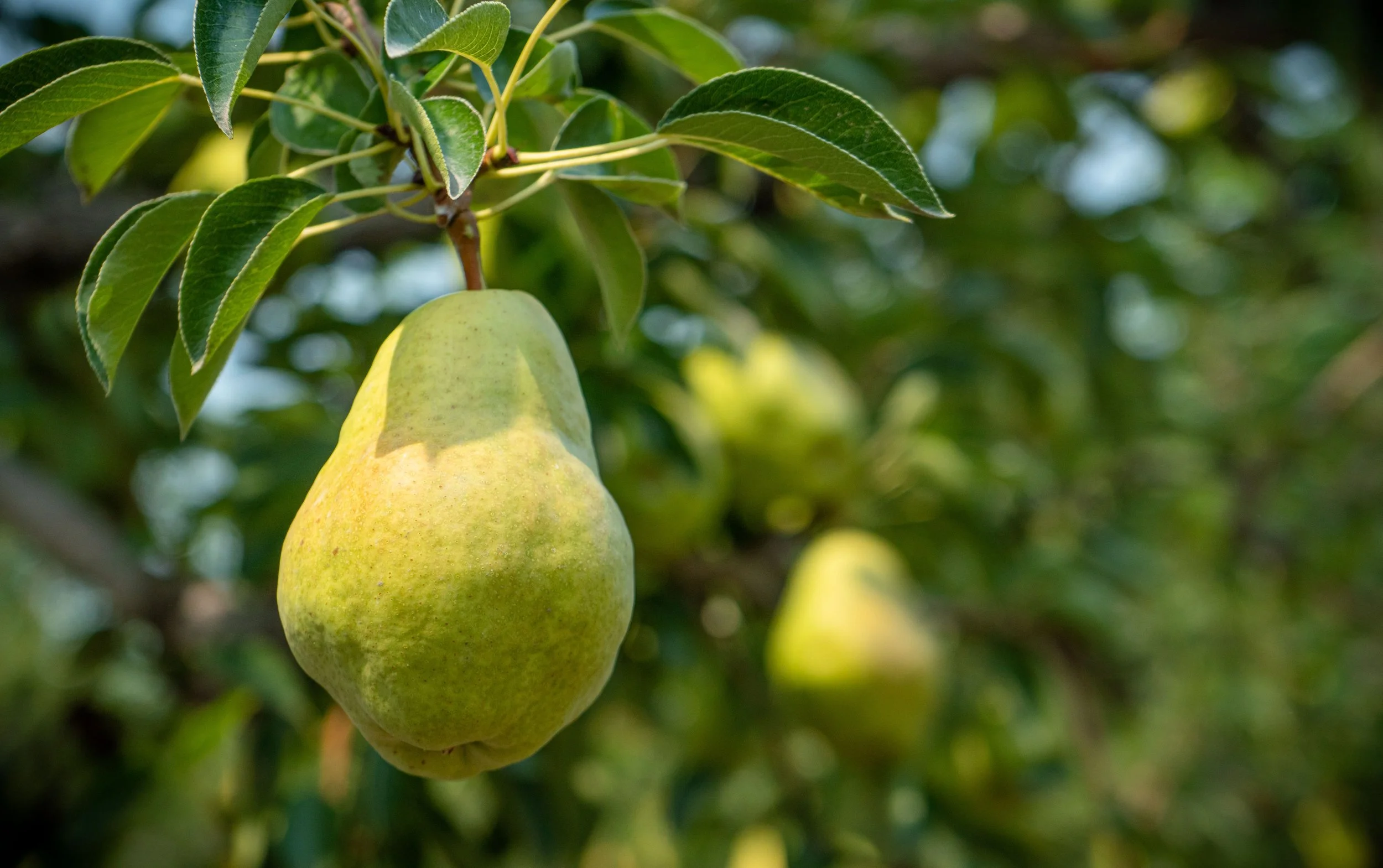
Bartlett Pear
History
Bartlett pears were first discovered in England by a schoolmaster named Mr. Stair in 1765. They were initially marketed as Williams Pears, but when they were brought over to North America in 1799 they were sold as Bartlett Pears.
Description
Bartlett pears are medium to large in size and have a true pyriform, or pear shape, which has a rounded large bottom half, tapering to a smaller curved neck with a light brown, slender stem. The colour of the skin lets you know when it’s ripe to eat as it transforms from green, sometimes with a pink cheek or brown russet spots, to a beautiful golden yellow. The flesh is aromatic, juicy and fine-grained, a true delight to bite into.
Harvest Availability
This pear is ready late August until mid October.
Best uses
Bartletts are an outstanding pear for fresh eating. They are one of the best pears for canning because of their flavour and how they ripen uniformly. They will keep for a few weeks when stored in the refrigerator. To ripen, place the pears on the counter for a few days. When they turn yellow, they are ready.
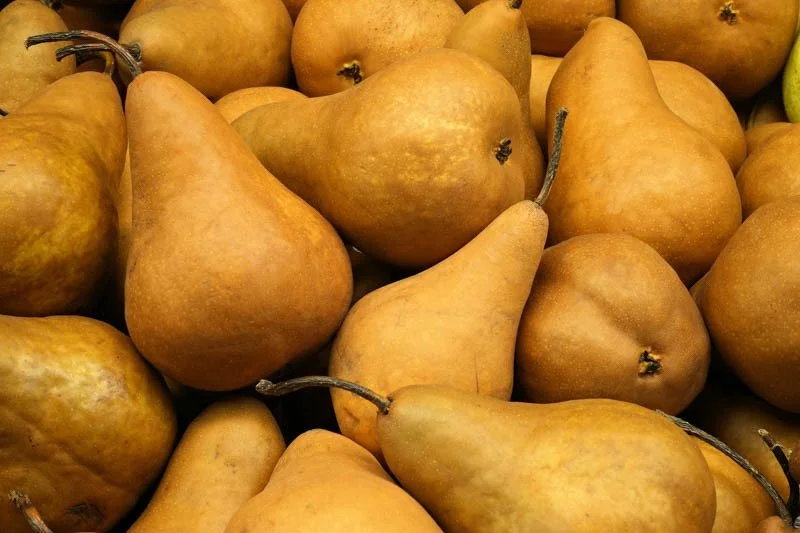
Bosc Pear
History
The origin of Bosc pears is unknown, as confusion exists over whether they are native to France or Belgium. The pear is named after Mr. Bosc, who named the pear “Beurré Bosc,” representing the sweet, buttery texture of the flesh.
Description
Bosc pears are medium to large in size and have a unique look: oblong with a round base that dramatically tapers to a long, thin neck, topped with a comically long stem The thick skin is golden tan and is covered in rough, brown russeting. The off-white flesh is firm, dense, and crisp with an intense honey aroma. When ripe, Bosc pears are juicy, crunchy, and have a very mild, sweet flavour.
Harvest Availability
Mid September until late October.
Best uses
Bosc pears are wonderful for fresh eating but are also suitable for cooking, baking, poaching, and drying. They stand up well when cooked, retaining their shape, making them ideal for pies. They should be kept at room temperature until ripe and will keep up to an additional week when stored in the refrigerator. To test for ripeness, gently press the neck near the stem: if it’s a little soft, it’s ready to eat.
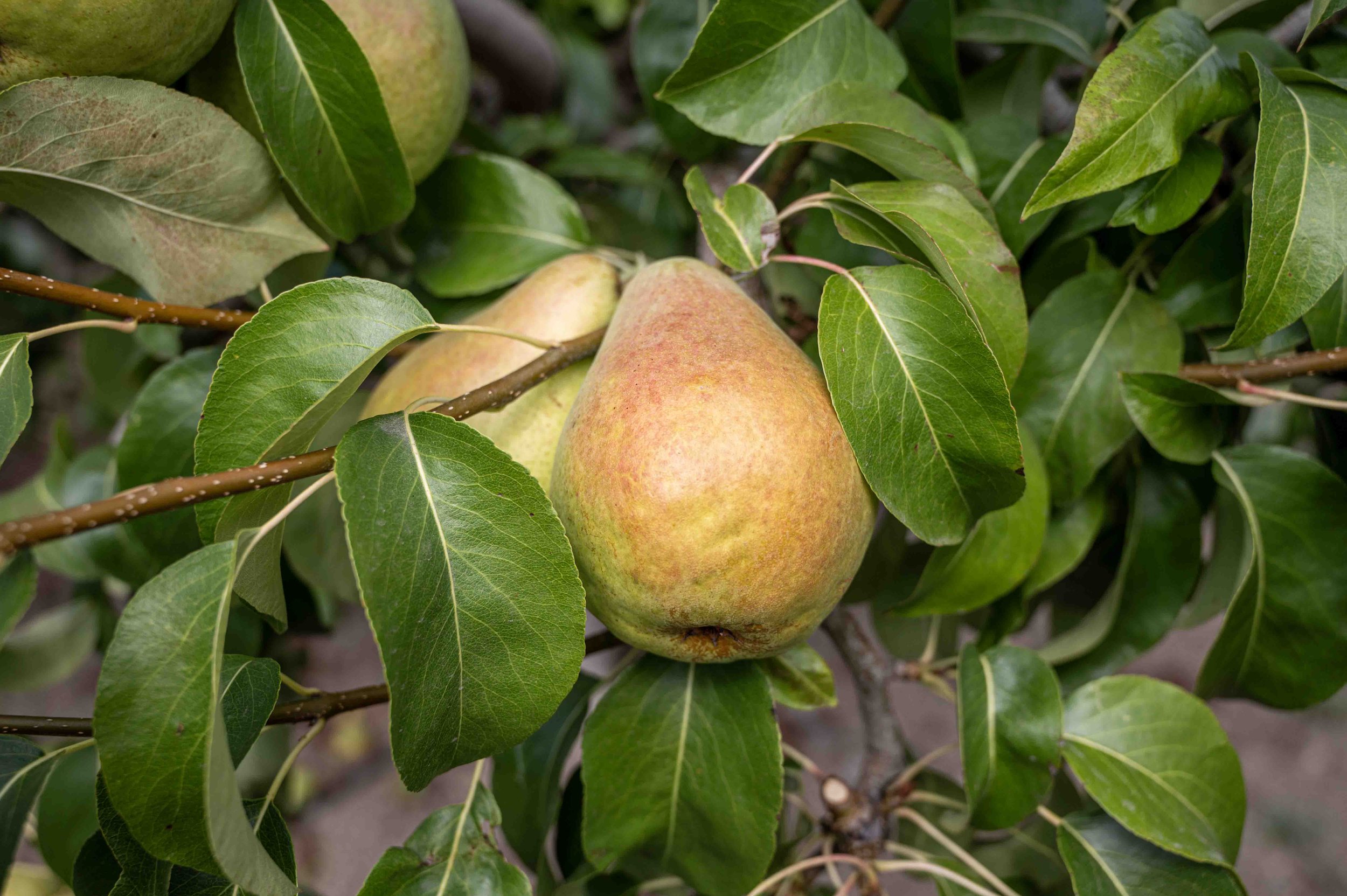
D’Anjou Pear
History
The original and proper name for D'Anjou pears is Beurré d'Anjou, which translates to, "buttery pears of Anjou" or Angers, France which is where the pears are believed to have originated in the early 19th century.
Description
D'Anjou pears are medium to large in size, and are shaped more like an egg than a true pear. They are rather squat, with a wide base that gently tapers to a rounded top with a short, thick stem. The flesh is white to cream-coloured, dense, and buttery. When perfectly ripe, they are the juiciest pear on the market. The skin is thick and bright green, sometimes with a red cheek. They stay green even when they are ready to eat, so check for ripeness by gently pressing near the stem of the pear. If your finger leaves an impression, it is ready to enjoy.
Harvest Availability
The harvest season for D’Anjou pears in the Okanagan usually spans from mid September until October.
Best uses
D'Anjou pears are excellent when eaten fresh but they are also amazing for baking and cooking. They make a nice sauce and are a good choice for pear preserves. Often referred to as "winter pears," D'Anjous will store for several months if kept in cold storage. Place them on the counter for a few days to ripen.
Asian Pear
History
Asian pears, also known as nashi pears or apple pears, originate from East Asia and are characterized by their round shape and crisp texture similar to apples. In the Okanagan Valley, a region well-known for its temperate climate and fertile soils ideal for fruit growing, Asian pears have gained popularity over recent decades due to their sweet flavour and good adaptability to local conditions. Asian pears are the only pear variety that we sell at Davison Orchards that we do not grow ourselves. Rather, we get them from a local farmer.
Description
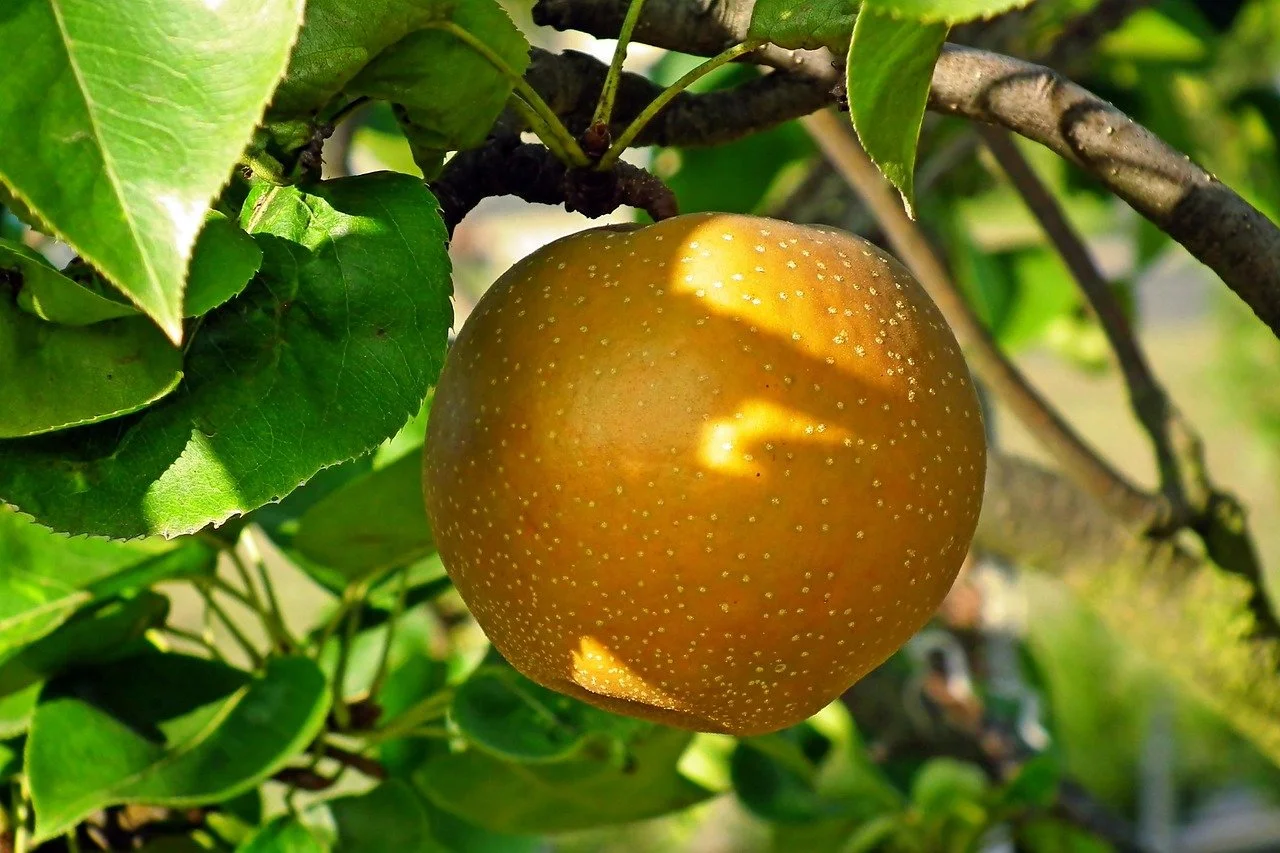
Asian pears are medium to large in size with thin, smooth skin that ranges in colour from pale yellow to golden brown. Their shape is round and slightly flattened, with no neck to speak of. The flesh is white, crisp, juicy, and sweet, with a fresh aroma and a delicate flavour.
Harvest Availability
The harvest season for Asian pears in the Okanagan usually spans from late August to October, depending on the specific variety and yearly climate conditions.
Best Uses
Asian pears are ideal for fresh eating due to their crisp texture and sweet flavour. Their firmness makes them suitable for light cooking, although they do not break down as readily as European pears, so they are less commonly used in purées or preserves.
Prune Plums
History
Italian Prunes, also known as Prune Plums, originate from Europe and have been grown for centuries for both fresh eating and dehydrating. Over the years, they have become especially popular for making dried prunes thanks to their naturally high sugar content and firm flesh.
Description
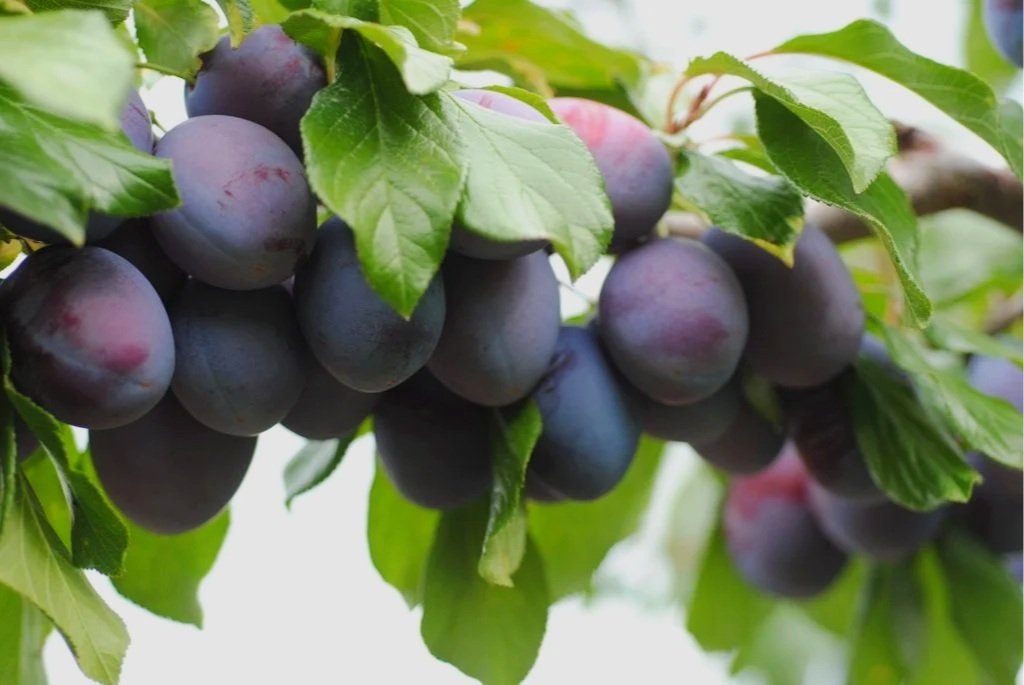
Italian Prunes are medium in size and oval in shape, with deep purple to blue skin and a light powdery finish. The flesh is golden-yellow to amber, firm, and dense with a smooth texture. They are not very juicy compared to other plums, which gives them a longer shelf life and makes them better for drying. They are freestone, meaning the pit separates easily from the flesh. When ripe, they are rich and sweet, with a pleasant level of acidity lingering on the tongue.
Harvest Availability
In the Okanagan, Italian Prunes are typically harvested from late August through September.
Best uses
Italian Prunes are excellent for fresh eating and are especially prized for baking. They hold their shape well in pies, tarts, cakes, and preserves such as jams and sauces. They are also ideal for drying into prunes. Prune plums are best stored away from direct light at room temperature. They will keep this way for about a week.
Watermelon
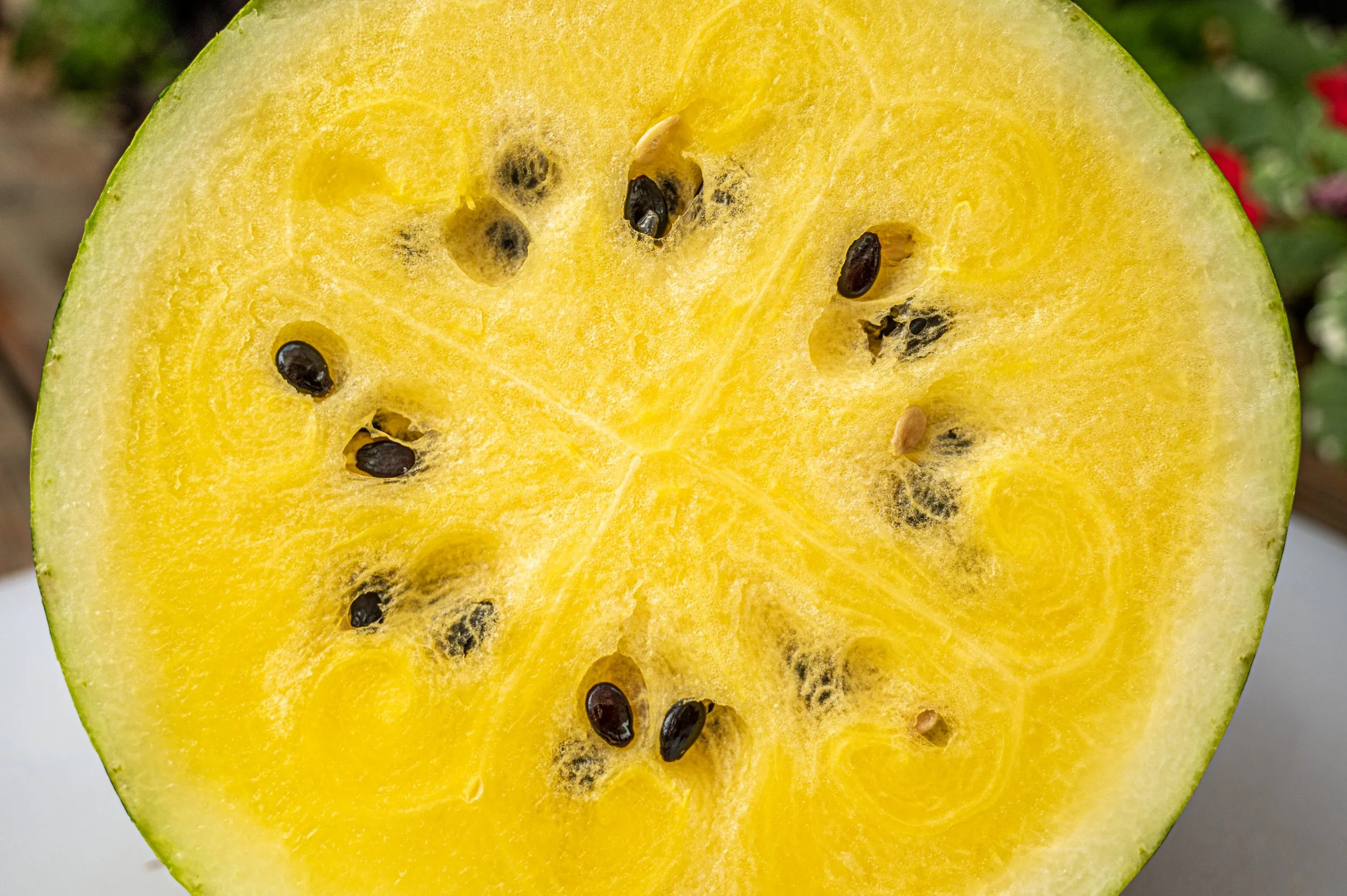
We grow a delicious assortment of vine-ripened red and yellow watermelons, all wonderfully sweet and refreshingly crisp. Our yellow varieties offer a bright golden flesh with the traditional juicy texture, adding a fun pop of colour to any fruit platter.
Watermelon is perfect sliced and chilled on a hot day, blended into smoothies or slushies, or added to fresh summer salads with mint and feta. It also makes a refreshing agua fresca (a Mexican style drink) or can be grilled for a unique twist at your next barbecue.
Cantaloupe
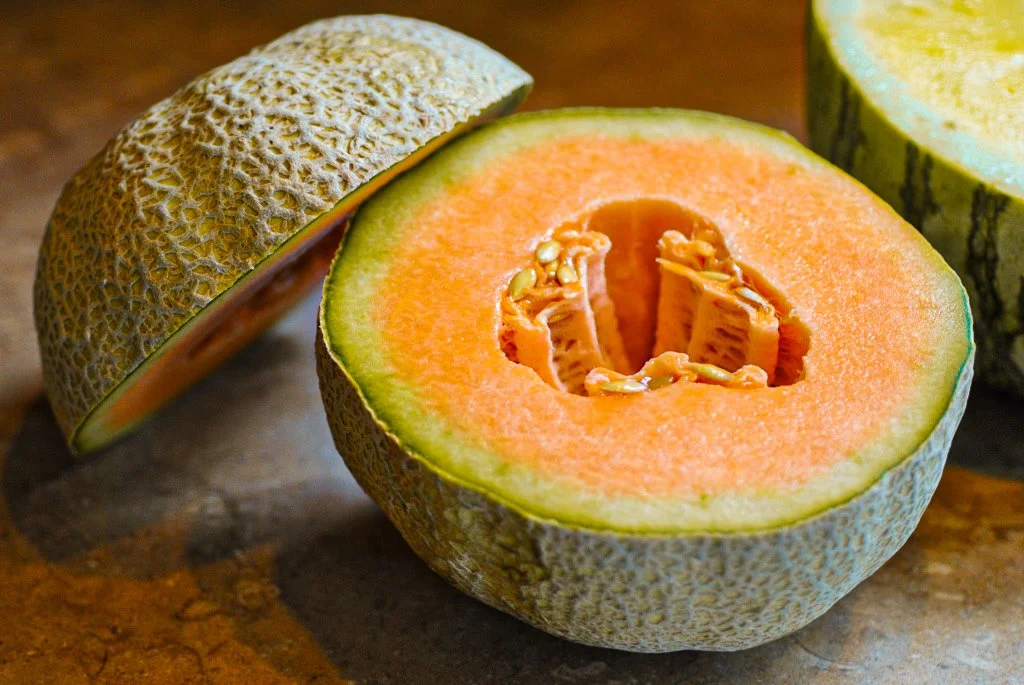
Nothing beats a vine-ripened cantaloupe; we grow a number of varieties, all sweet, juicy, and perfectly fragrant. The orange flesh is smooth and tender, making every bite refreshing and full of summer flavour.
Cantaloupe is perfect sliced and enjoyed fresh, cubed in fruit salads, blended into smoothies, or served with prosciutto for a sweet-savoury twist.
Apricots
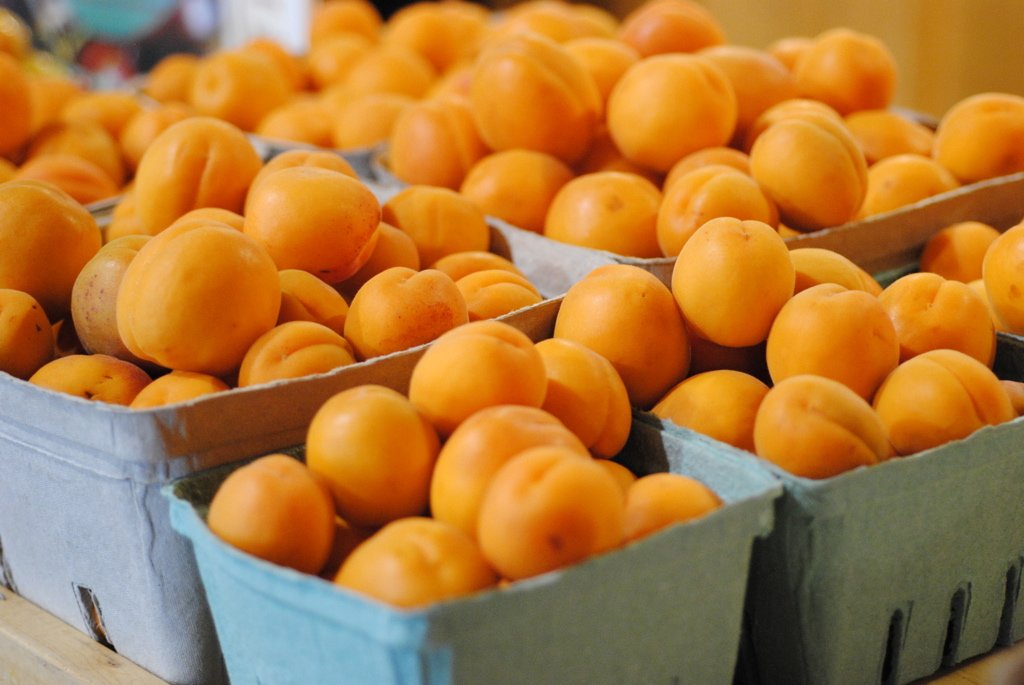
The arrival of apricots in the market hails the beginning of summer. We grow multiple varieties at our farm. They are bursting with hearty flavour and are sweet with a hint of tartness. The bright orange flesh is tender and fragrant, making them perfect for snacking straight from the tree.
Apricots are great fresh, sliced into fruit salads, dehydrated or baked into loaves or muffins. They cook down beautifully into jams, preserves, and sauces. For a unique dessert they can even be grilled for a sweet, caramelized treat.
Cherries
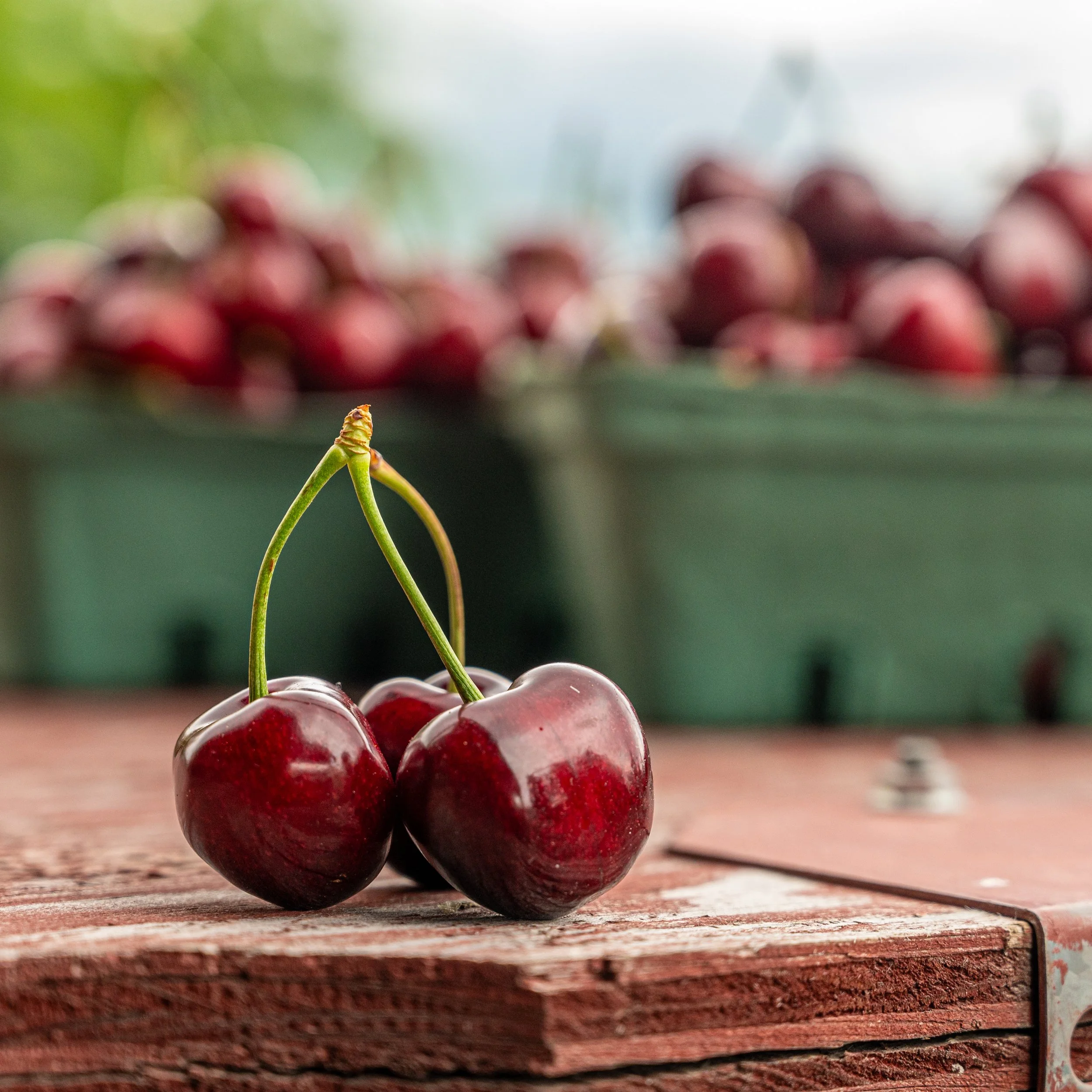
We offer a wide selection of local cherries from the Okanagan, even though we don’t grow them ourselves. Our assortment include popular varieties like Titan, Rainier, and many other regional favourites.
These cherries are sweet, juicy, and perfect for snacking fresh. They’re also great for baking into pies and tarts, adding to fruit salads, making preserves, or enjoying as a refreshing summer treat.
Strawberries
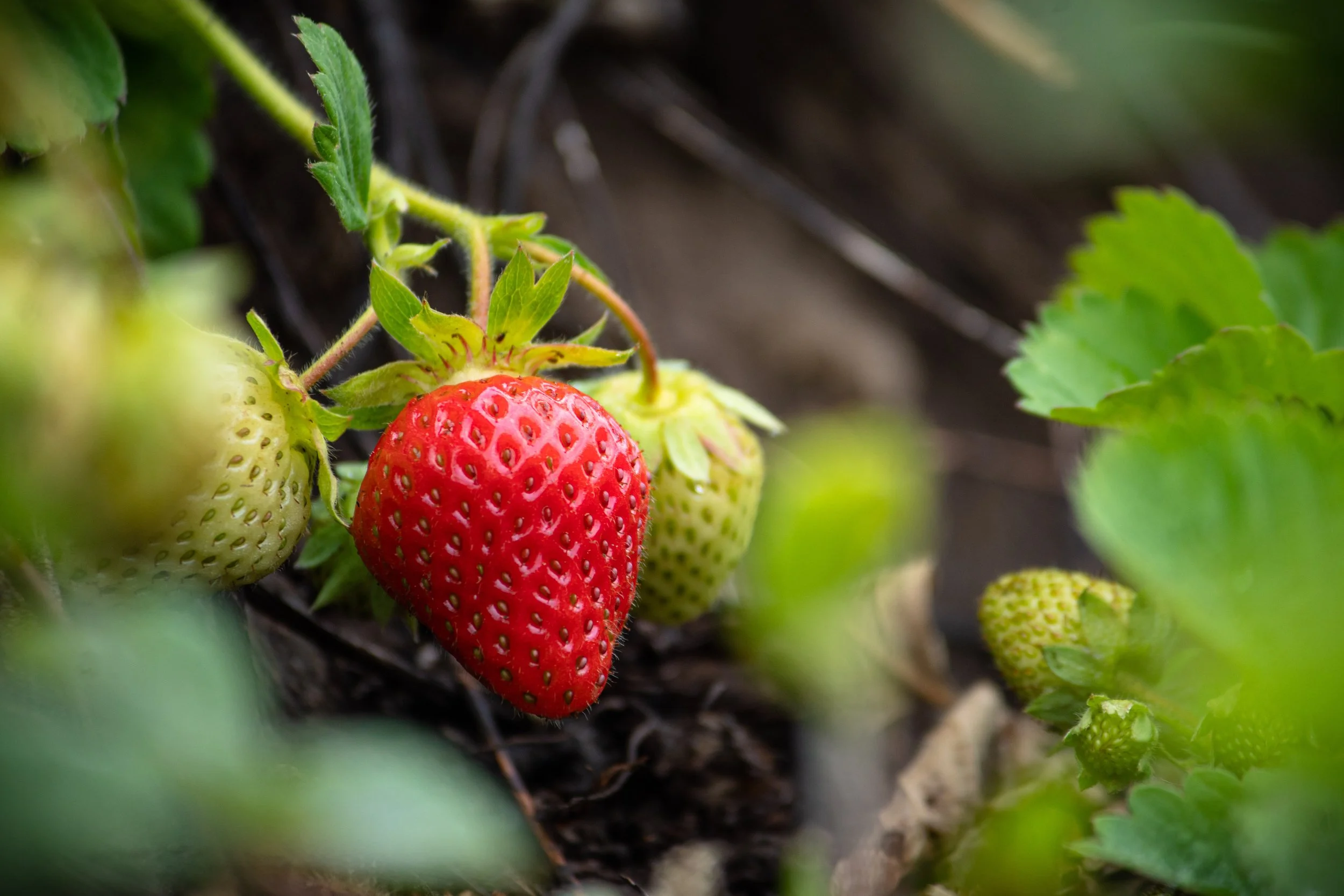
Our first harvest every year is strawberries! Grown by us on our Grandview Farm in Spallumcheen, BC, these berries are nothing like the ones you find year round in the grocery store. Picked at peak ripeness, they are incredibly juicy, beautifully red and bursting with the flavour of sunshine.
Strawberries are perfect for eating by the handful, adding to fruit salads, blending into smoothies, topping desserts or waffles, or making into jams and preserves. They freeze very well, making them easy to enjoy year round.
Grapes
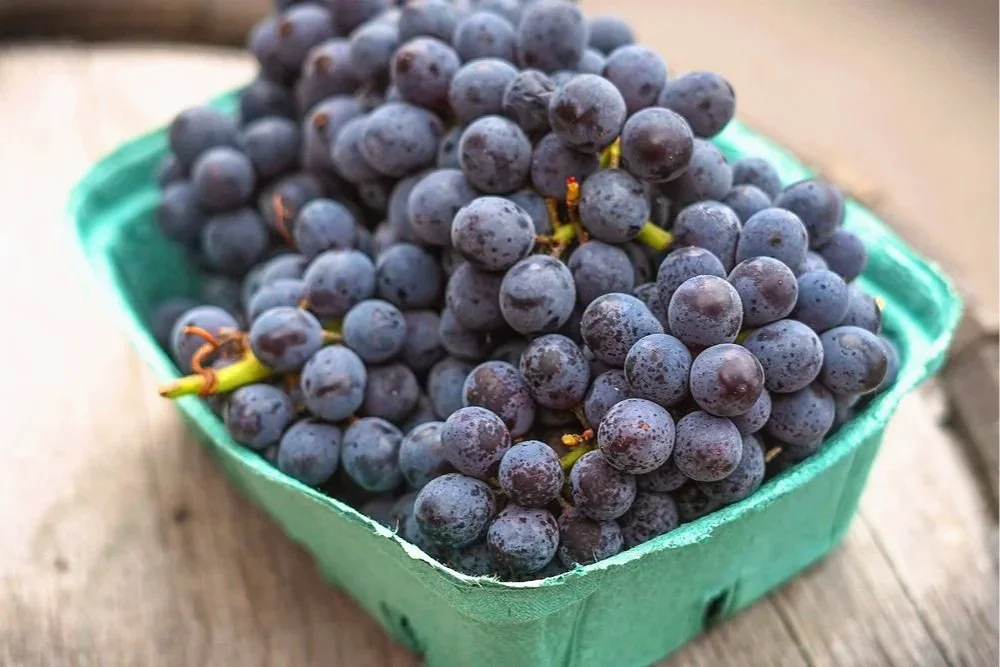
We bring in a selection of local Okanagan table grapes to sell in our market. These grapes are sweet, juicy, and perfect for snacking or adding a fresh touch to your favourite dishes.
Enjoy them fresh, in fruit salads, frozen for a cool treat, juiced, or made into homemade jelly’s and sauces. Grapes are also a delicious addition to charcuterie boards.
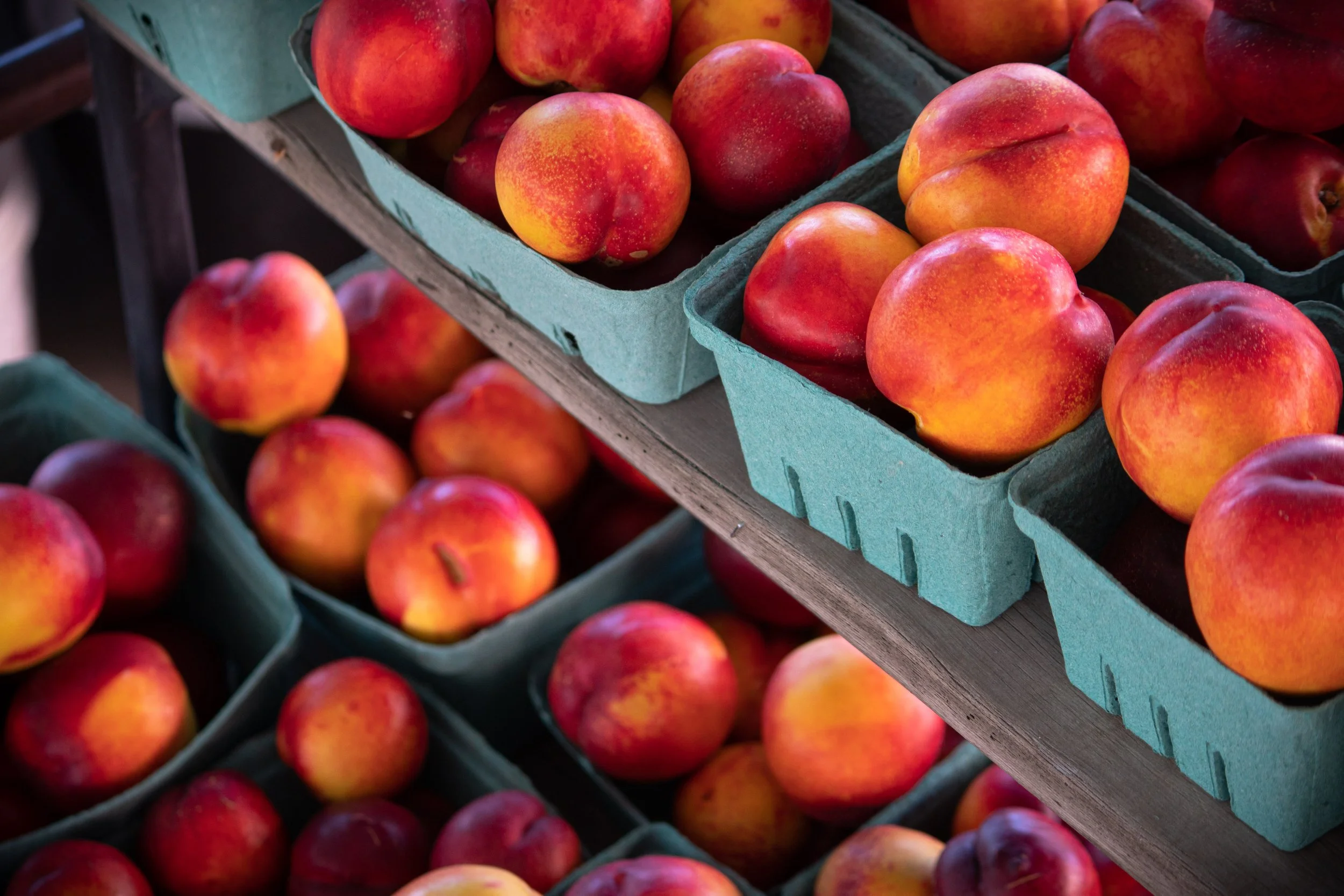
Nectarines
We bring in a selection of local nectarines, grown in the Okanagan, for our market. Nectarines are medium to large in size and have stunning, smooth red-orange skin. The flesh is golden yellow and has just the right balance balance between sweet and tart.
Nectarines are wonderful for eating out-of-hand, adding to fruit salads, baking into pies and tarts, grilling for a caramelized dessert, or making into jams and preserves. They’re also delicious stirred into yogurt or blended into smoothies.
